Governance and audit
Policies that are checked before work happens, and a record of everything that did.
Policies
A policy is a guardrail. It has a scope — what it governs — and versioned rules — what it requires. Each rule is a condition on a known fact about the change being made: the environment's stage, the blueprint, the owner, and so on.
When a policy is checked
| Phase | Checked when |
|---|---|
| Plan time | A change is planned |
| Pre-deploy | Just before work is dispatched |
| Promotion time | A release is promoted into an environment |
| Decommission time | Something is being torn down |
What a policy does when it fails
| Enforcement | Effect |
|---|---|
| Audit | Record the result only |
| Warn | Require someone's approval before going on |
| Enforce | Block |
A good way to introduce a guardrail is to publish it as audit, see what it would have caught, then move it to warn and finally enforce.
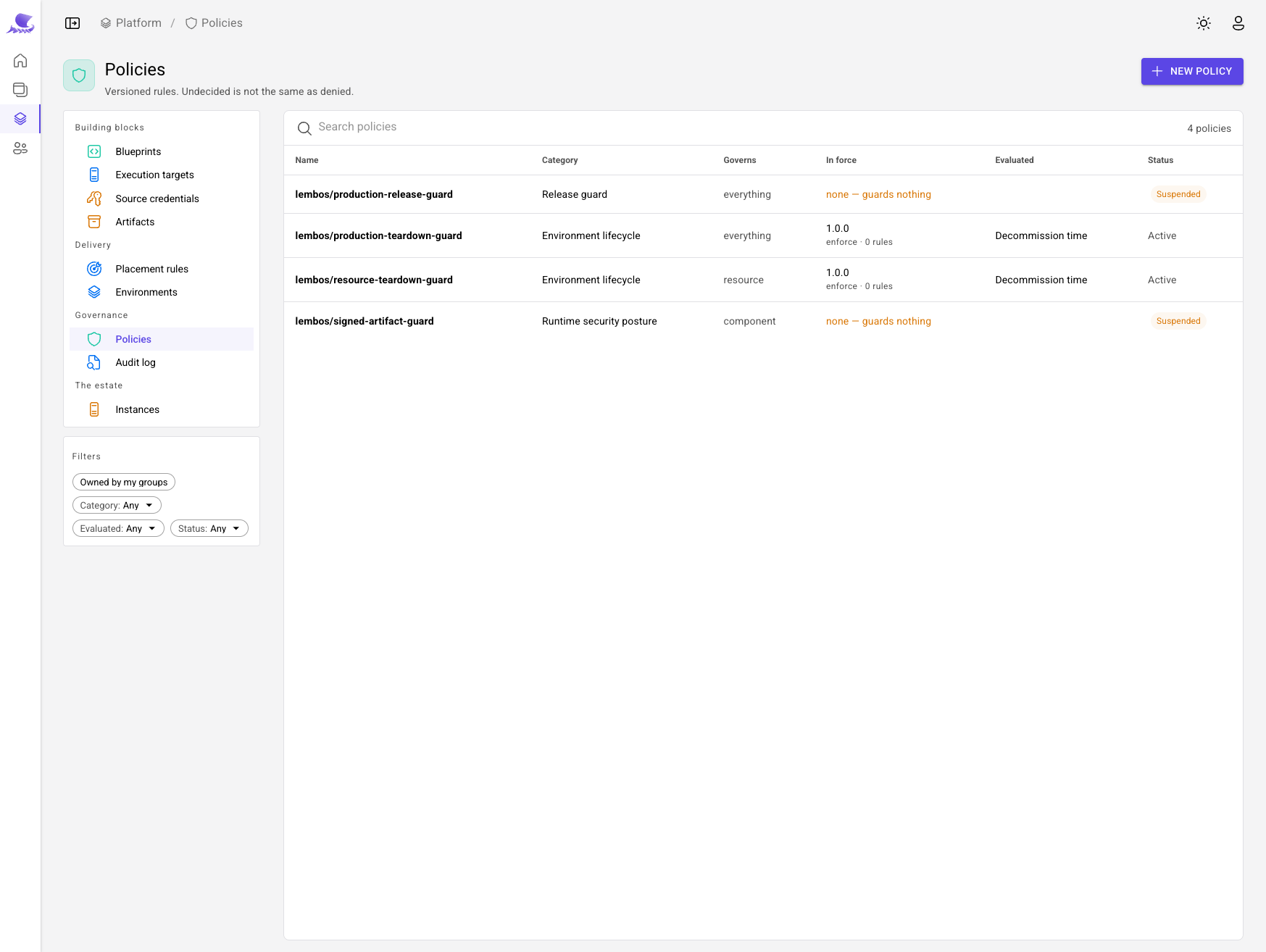
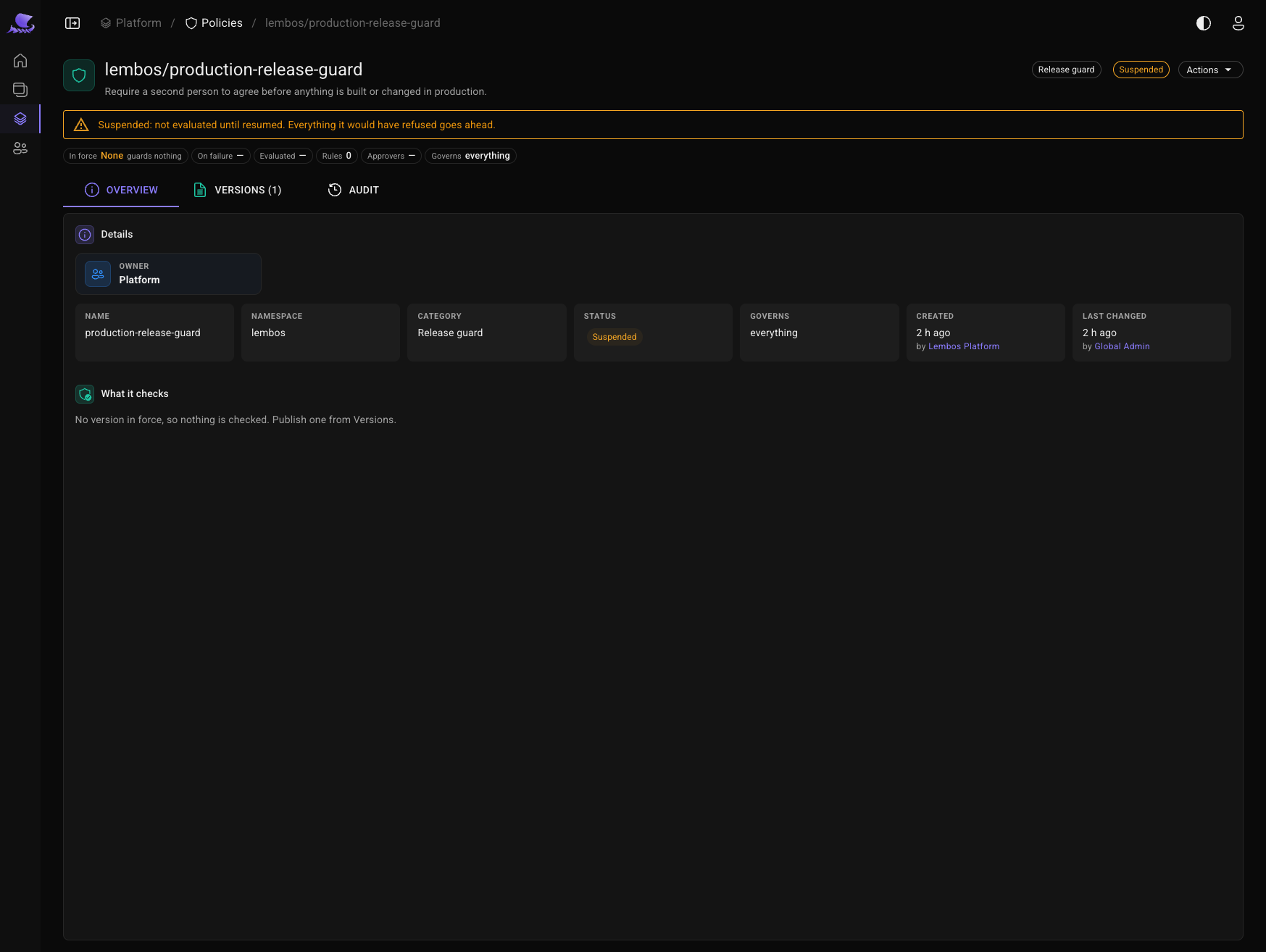
A policy's page shows its scope, what it checks and its versions — and says plainly when it is checking nothing:
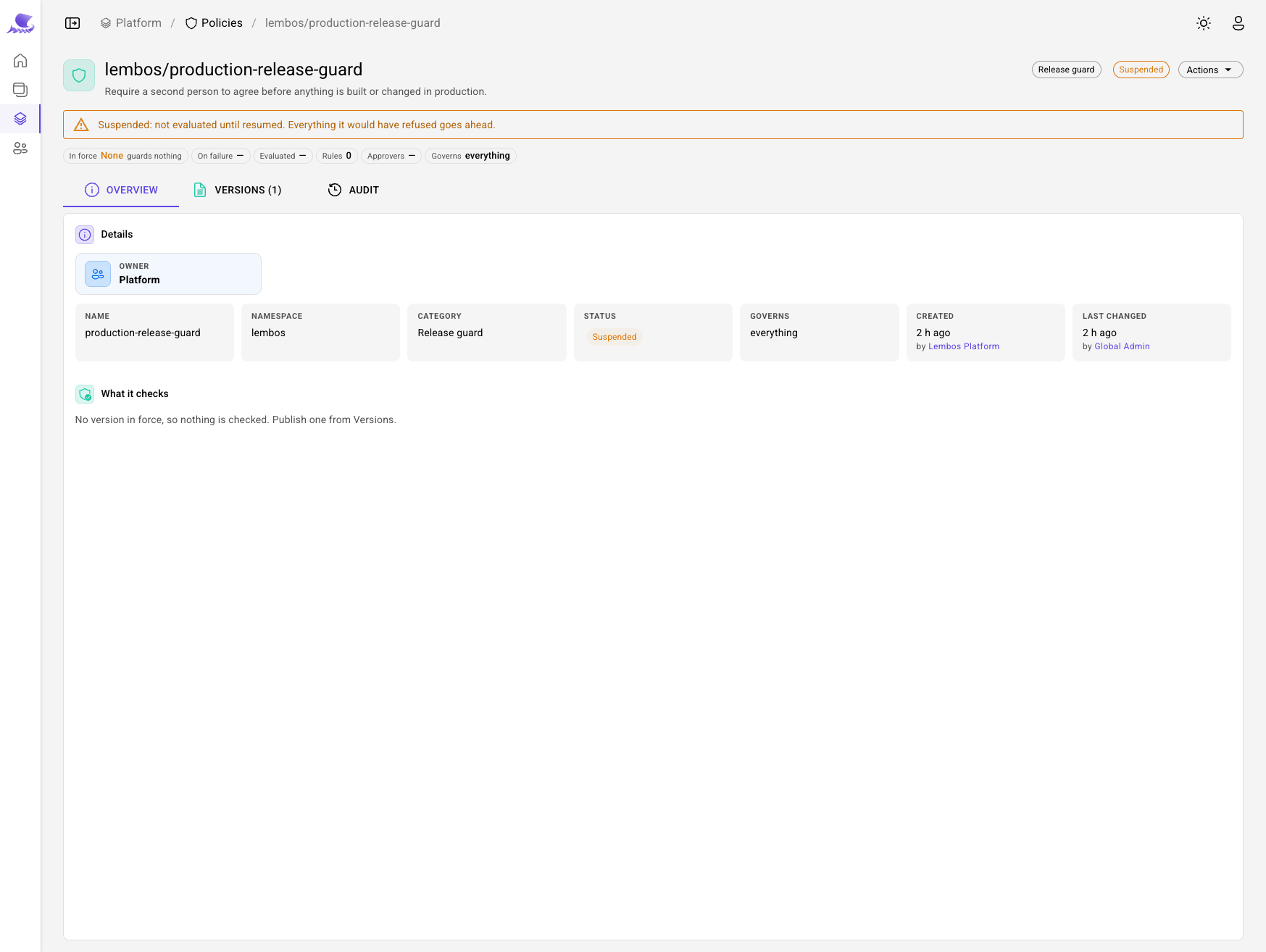
Policies are checked before work is dispatched, not audited after it lands. Every decision records the exact policy version that made it, so a later edit cannot change what was enforced at the time.
A rule whose fact was never supplied is reported as indeterminate, not as passing. A guardrail that looks configured but quietly enforces nothing is worse than none.
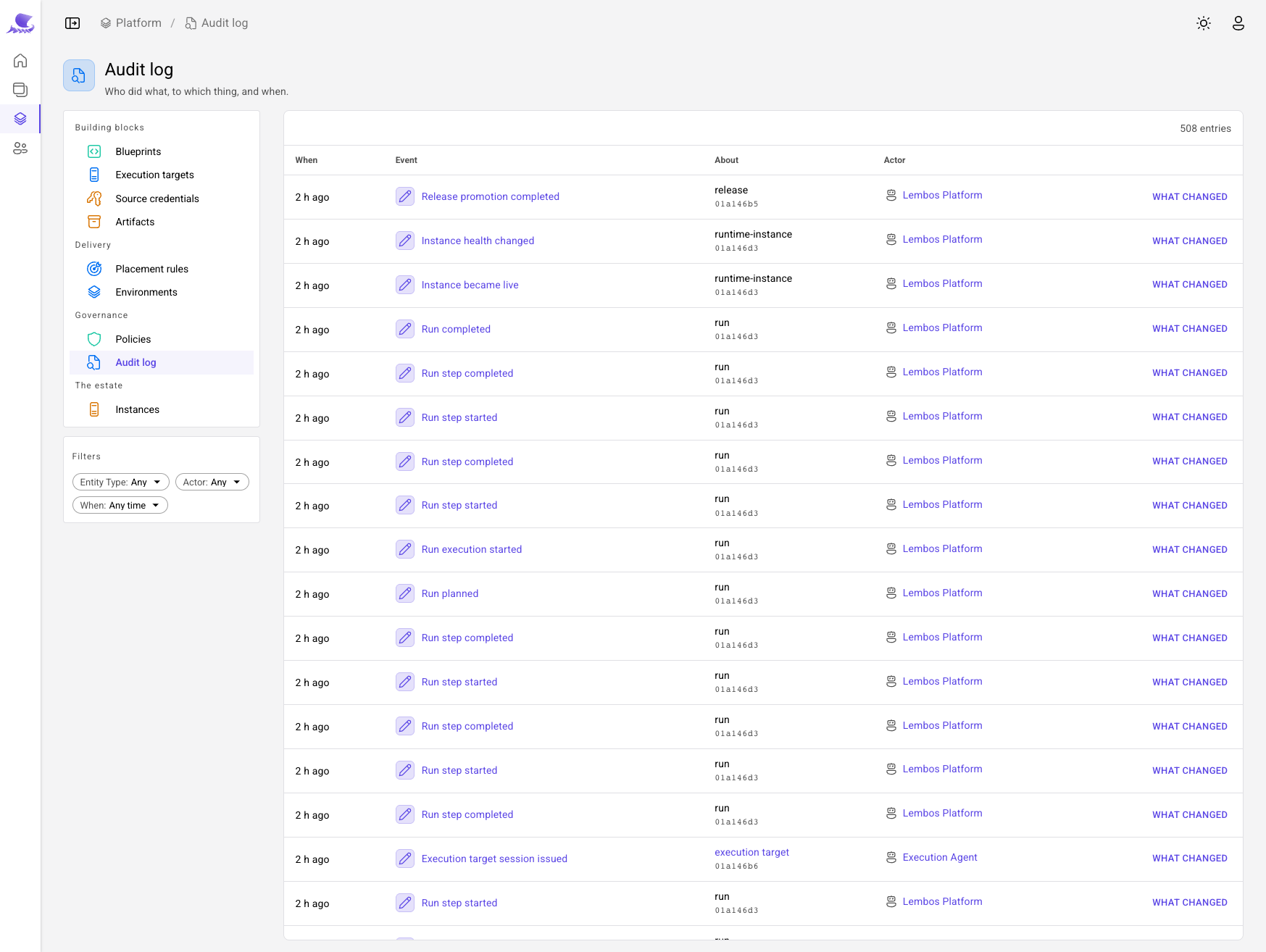
The audit log
Every change made in Lembos — by a person or by a machine — is written to the audit log under Platform → Audit log: who did what, when, and what changed. It is a property of the platform, not a feature that can be turned off.