Publish golden paths
Blueprints, and the execution targets and credentials they run with.
A golden path in Lembos is a blueprint: a versioned recipe for building a component, a resource or an environment. Platform teams write them once; product teams use them without having to learn what is underneath. Find them under Platform.
Where things run: execution targets
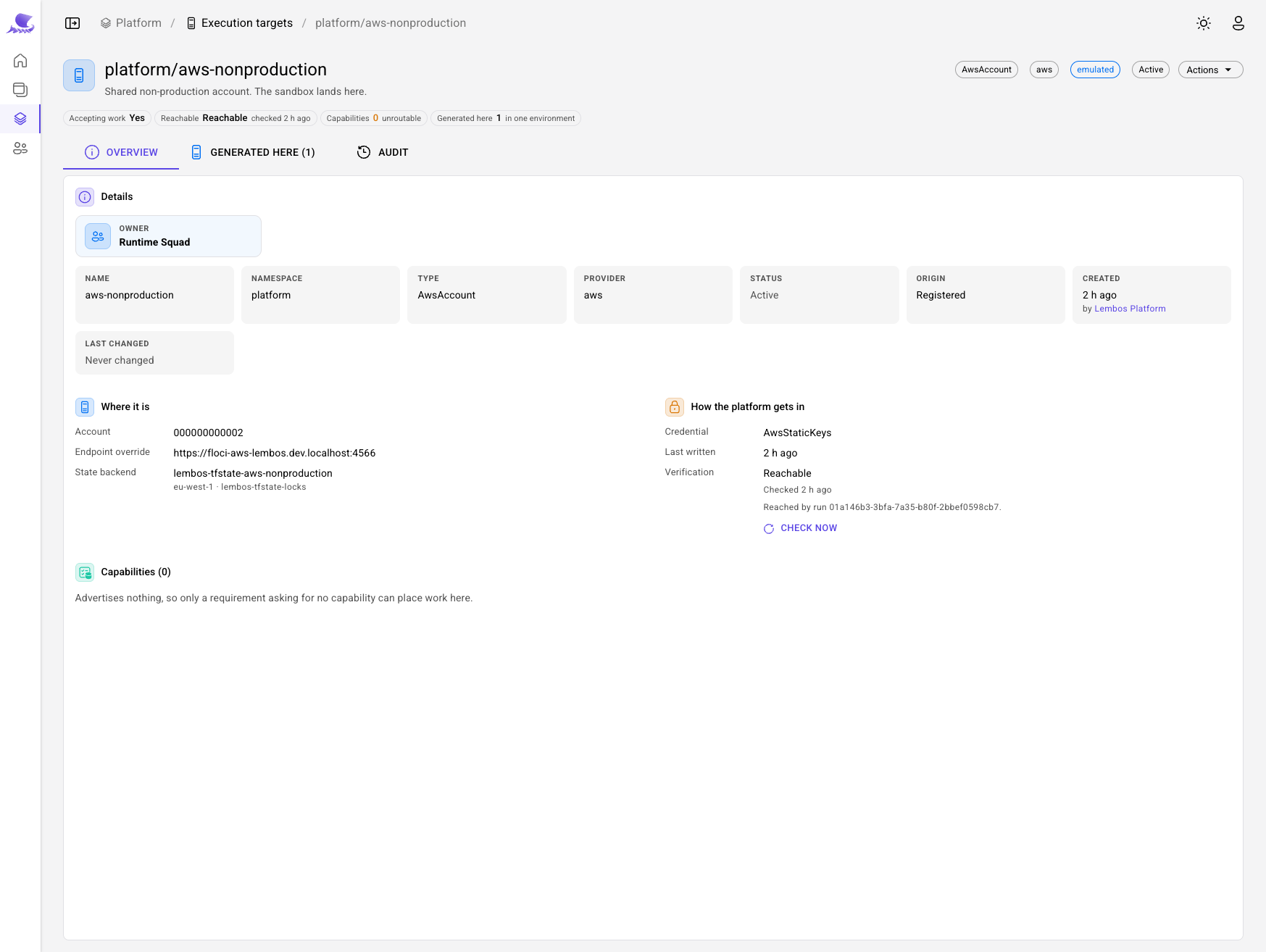
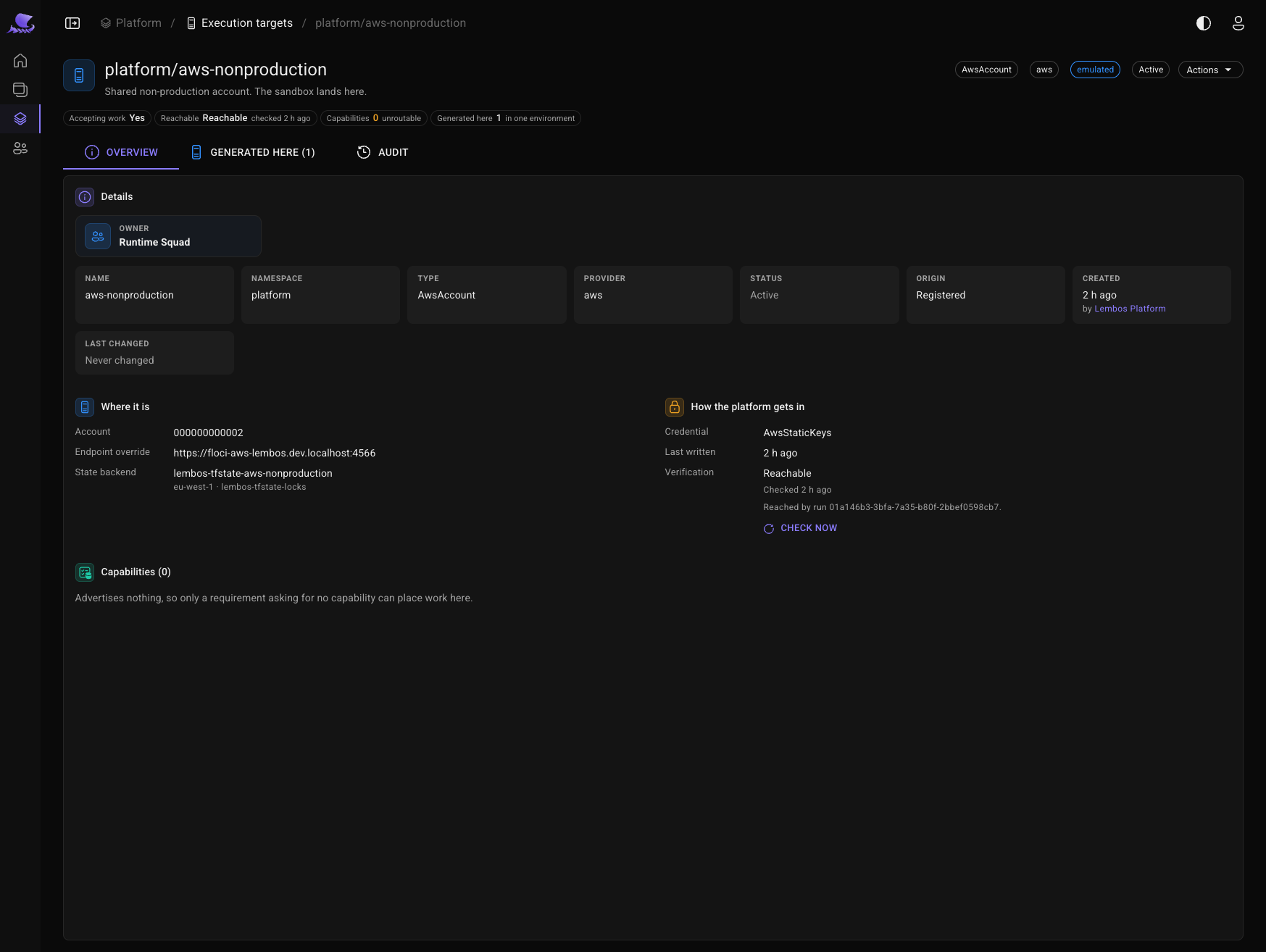
An execution target is somewhere Lembos is allowed to build into — a cloud account, an on-premises site, a Kubernetes cluster. Registering one is a deliberate act by the platform team; a blueprint can never create one.
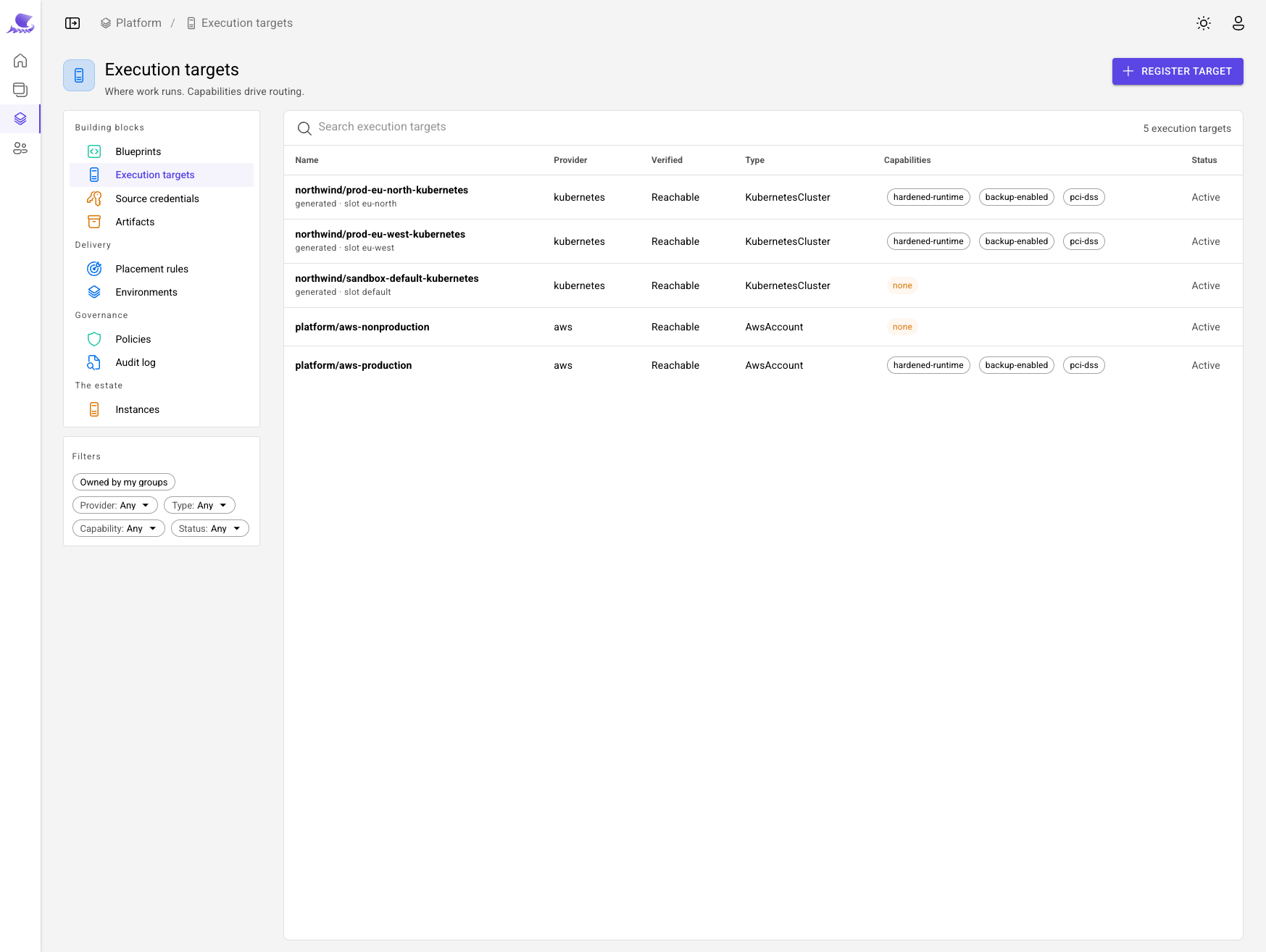
Lembos checks the connection the moment a target is registered or changed, and on request, so a wrong role or an expired credential shows up on the target rather than on the next deployment. A target's page shows where it is, how the platform gets in, and when that was last checked.
Private sources: source credentials
Blueprints usually live in private Git repositories or registries. A source credential — a token, a GitHub App or an SSH key — opens every source under the URL prefixes you give it. The most specific prefix wins, so one repository can have a credential of its own. A GitHub App's key never leaves the platform: each fetch gets a short-lived, read-only token for one repository.
Blueprints
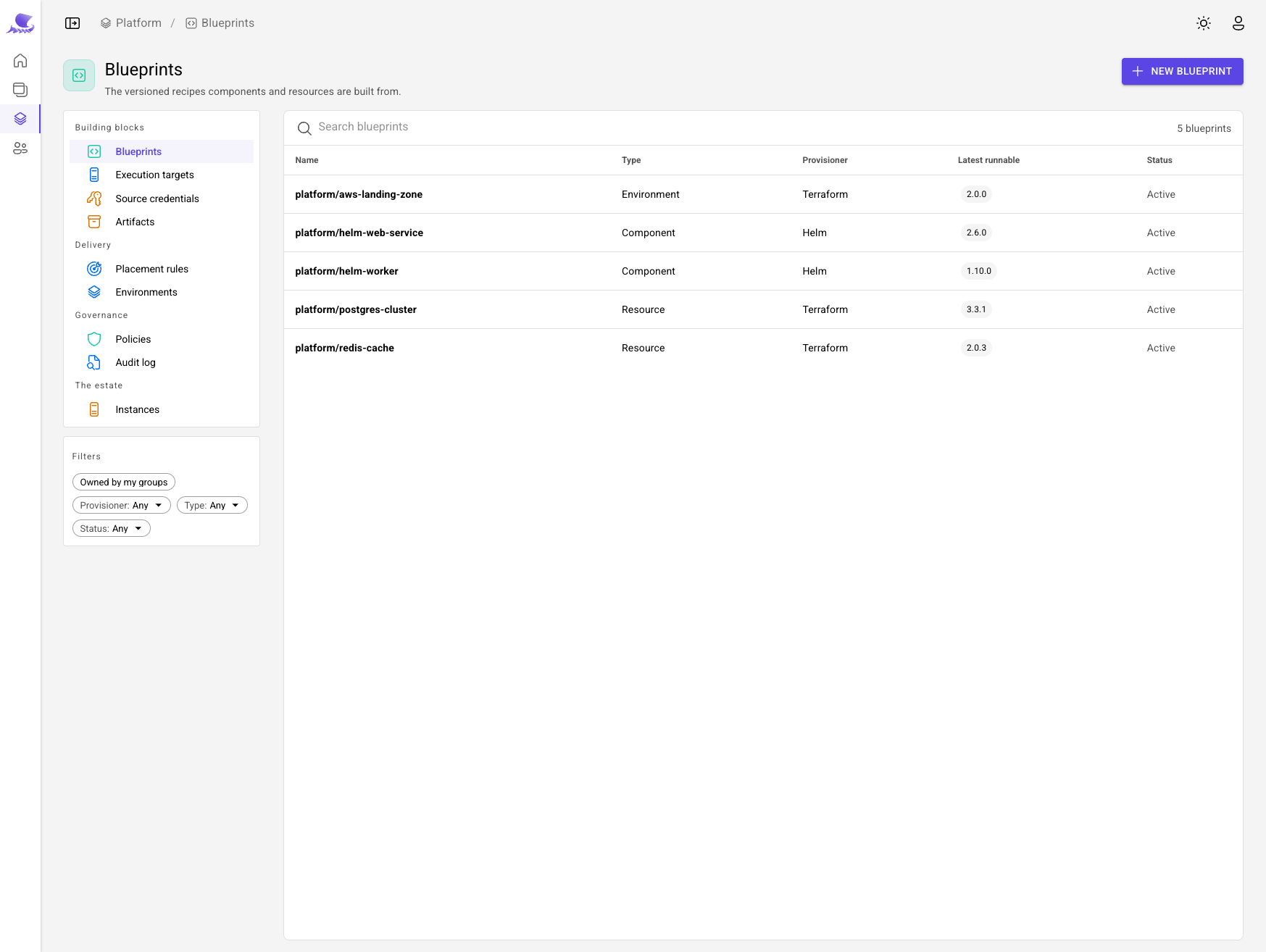
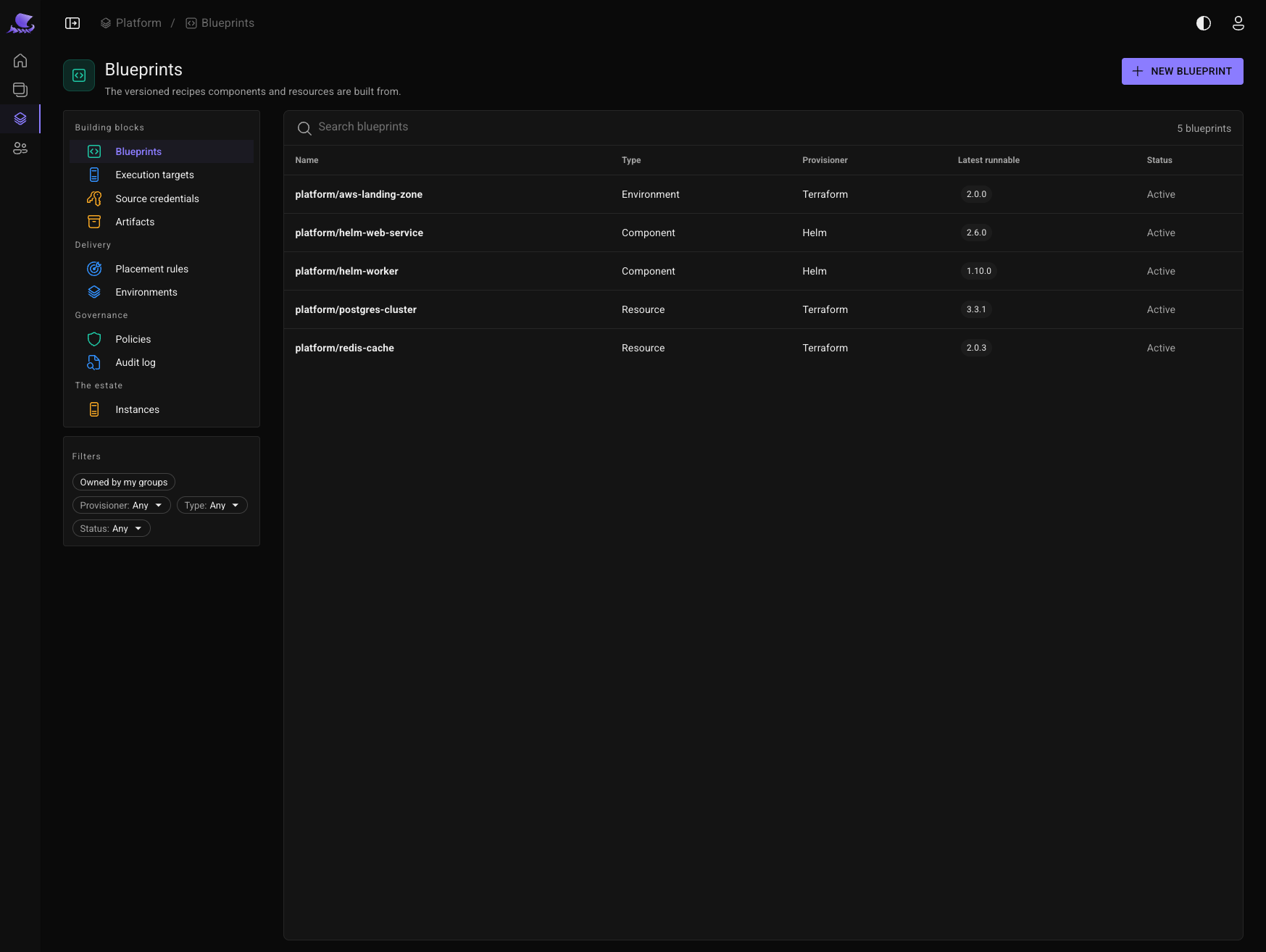
Each blueprint version pins:
- What it builds — a component, a resource, or an environment.
- The tool — Terraform or Helm — and the exact version of it, chosen from that tool's published releases.
- The source — a Git repository or OCI registry, optionally pinned to a digest.
- Its inputs and outputs — what it asks for, who may answer each input (the product team or the environment), and what it promises back.
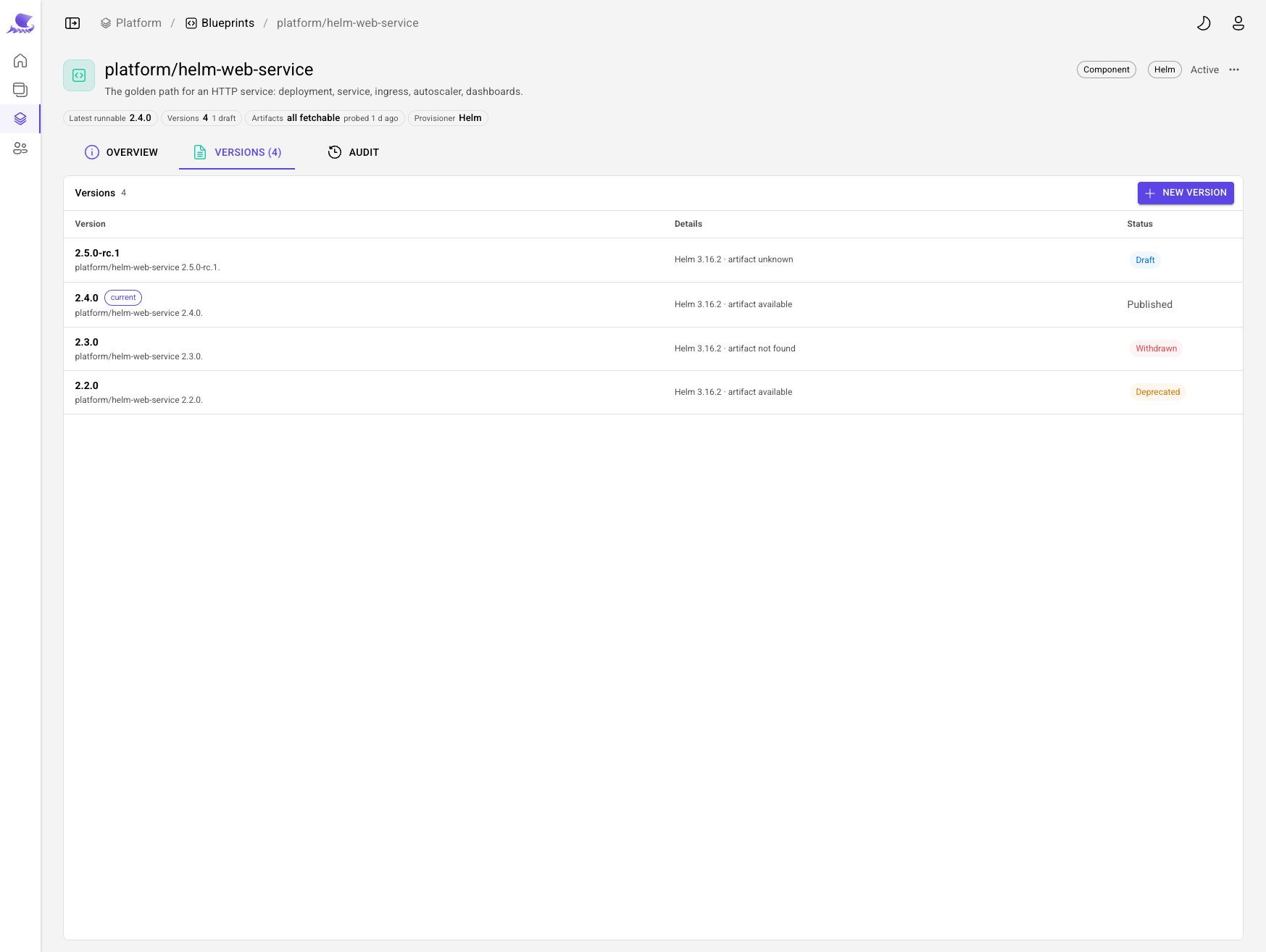
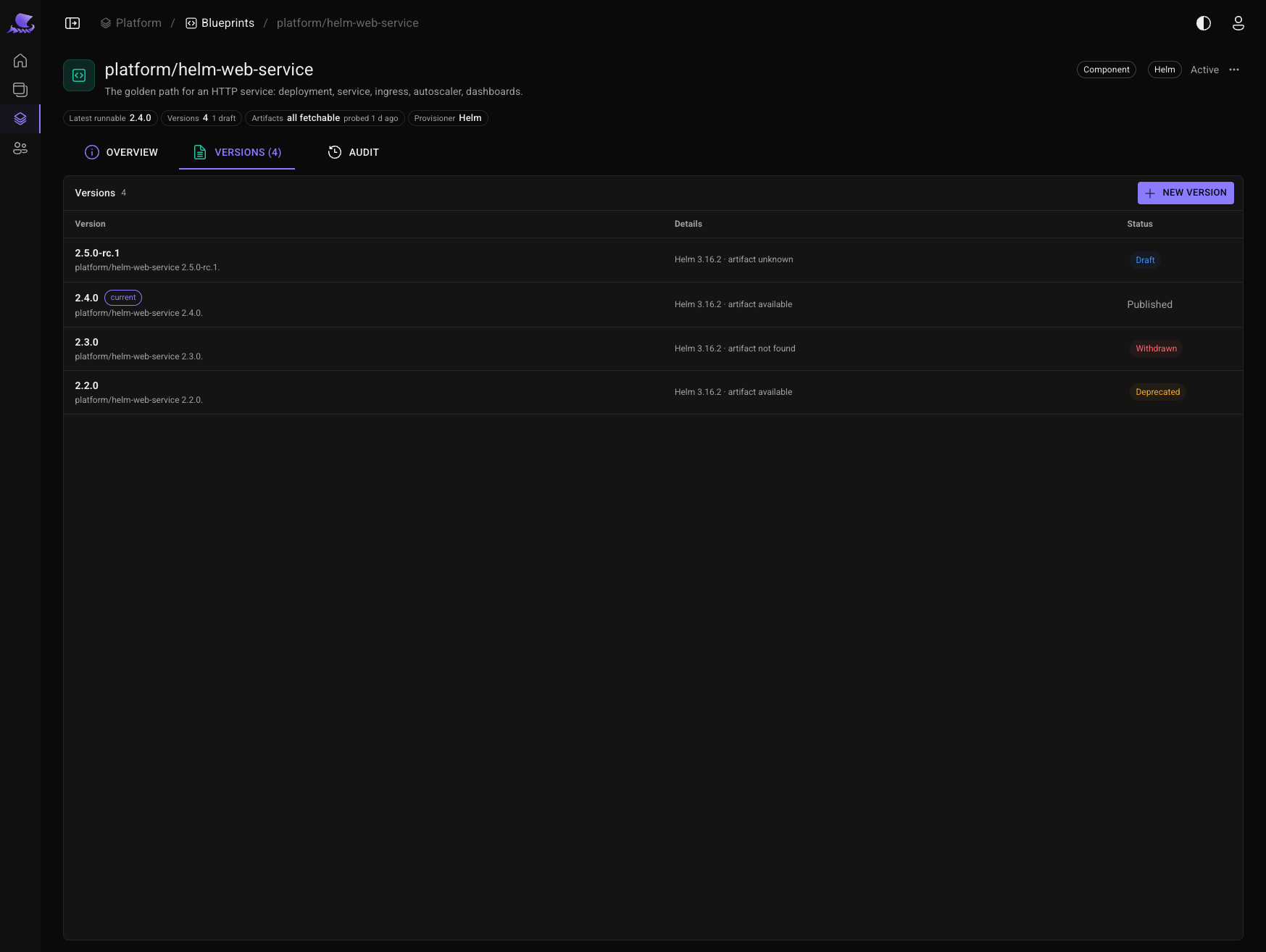
The version lifecycle
A version starts as a draft, where you can edit it and import its inputs and outputs from the module itself. It can be published only once Lembos has fetched its source from the fleet that will run it — a version that cannot be retrieved is never handed out.
A published version never changes. To change a golden path, publish a new version. Nothing pinned to the old one moves until its owner moves it, and the Portal shows where each version is still in use. Older versions can be deprecated (still usable, discouraged) or withdrawn (no longer offered).
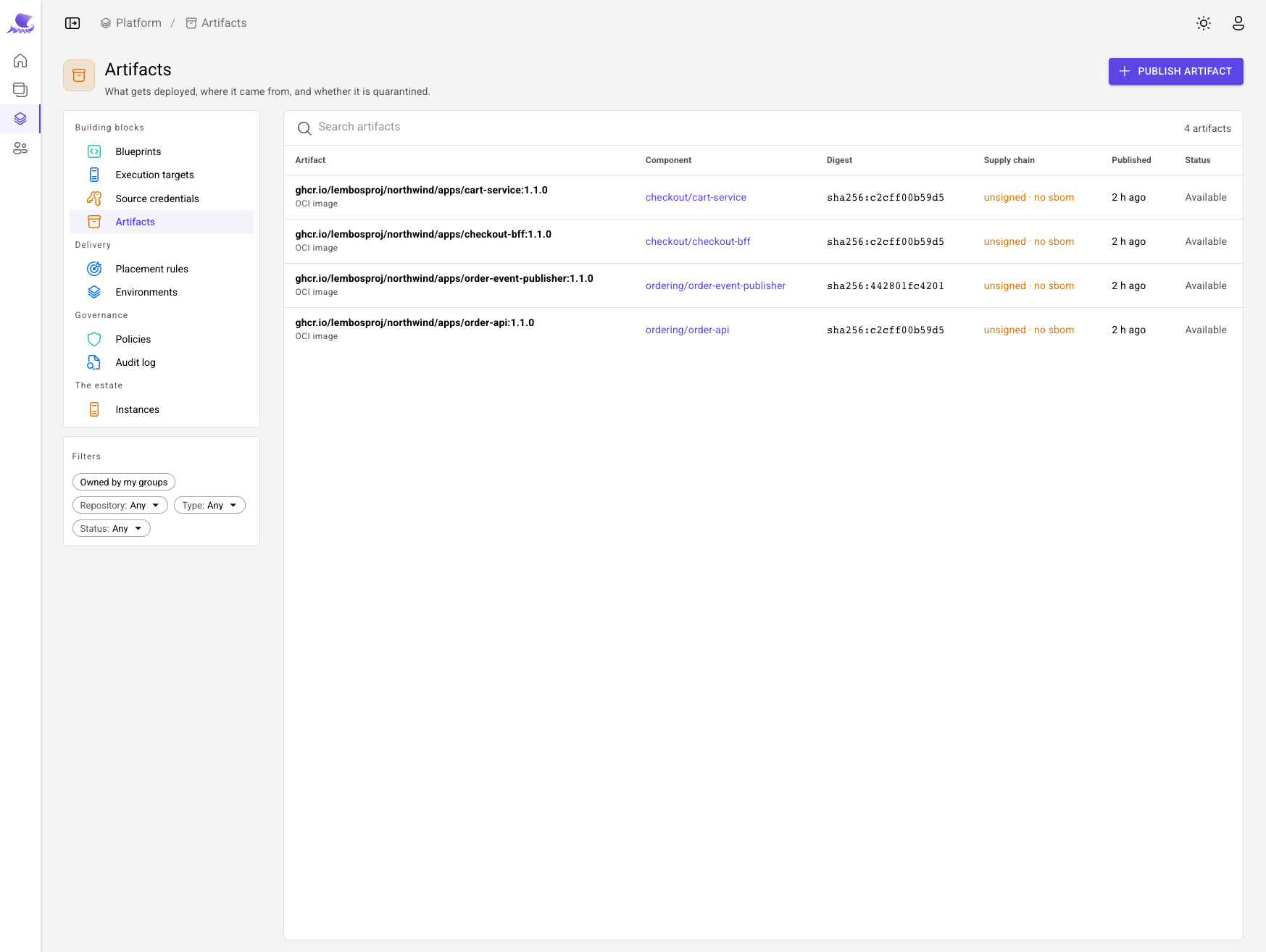
Artifacts
An artifact is a specific built thing — an image, a chart — identified by its content digest, with a record of where it was built from. An artifact can be quarantined, which stops it from being deployed anywhere.