Environments and placement
Declaring where software is delivered, and the rules for what may go there.
Environments
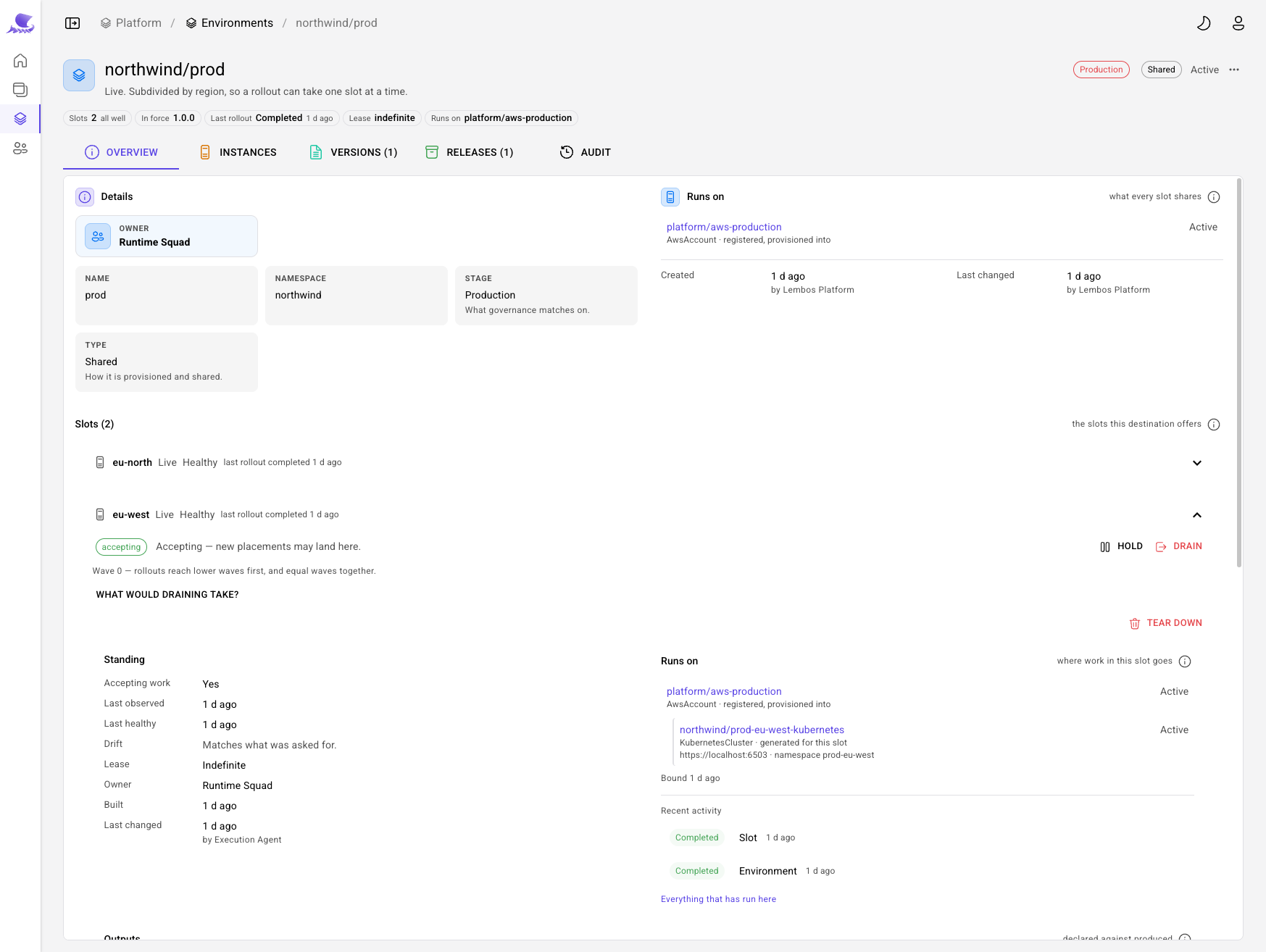
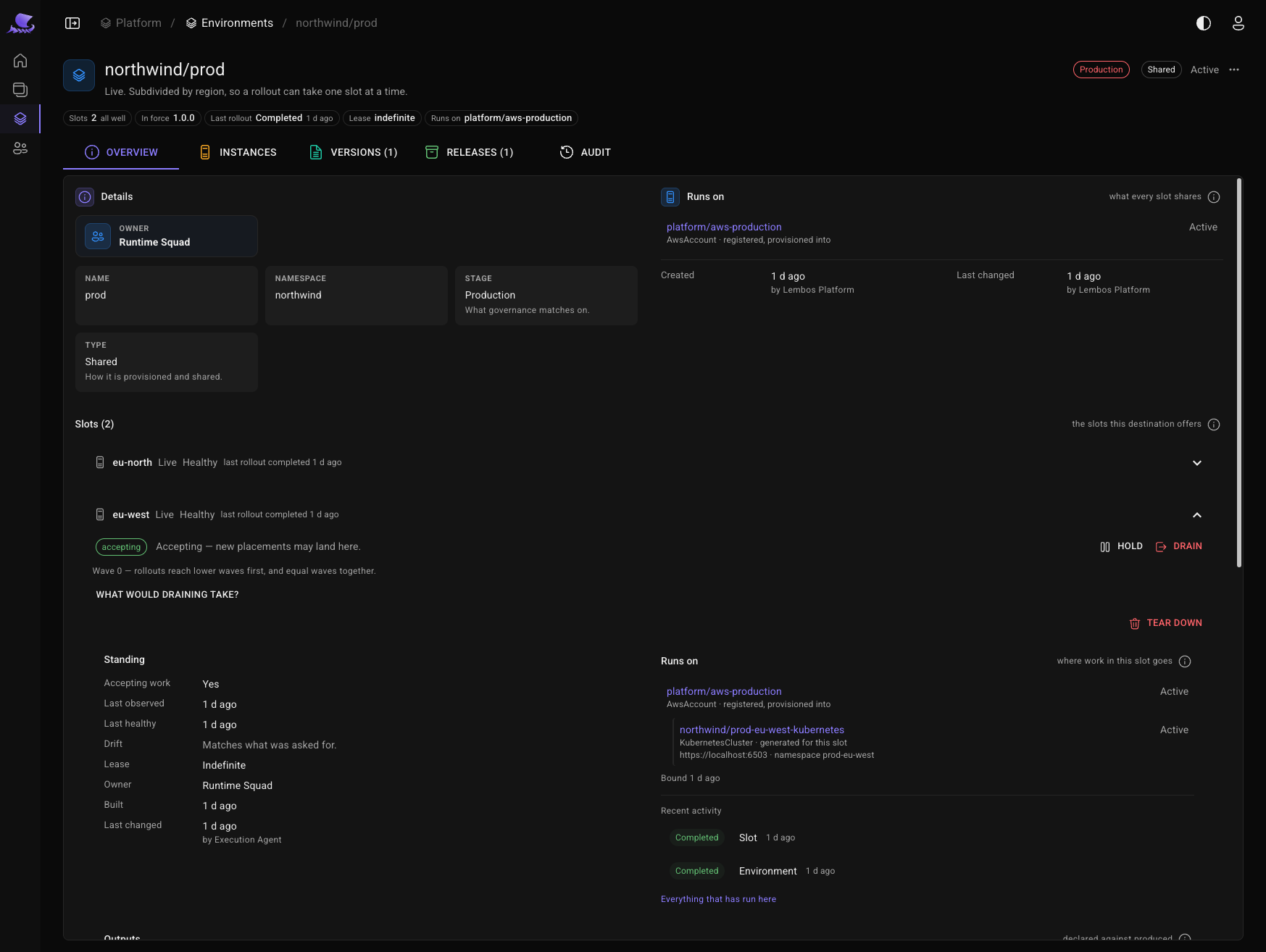
An environment is a place to deliver into. Each has:
- a stage — dev, test, staging or prod — which policies can match on;
- a type — shared by many systems, dedicated to one, or ephemeral;
- an environment blueprint, which builds its landing zone;
- outputs it shares with everything that runs in it — a tracing endpoint, a log level, a network.
Environments are versioned like everything else: a change is a new version, reviewed as a draft first.
Slots
An environment can be divided into slots, each described by dimensions such as region=eu-west-1 or
country=DE. Use slots for data residency, latency, or anything else where one environment needs several
copies of the same workload. A slot can override the environment's outputs.
Ephemeral environments
An ephemeral environment carries a lease. A pull-request preview expires on its own instead of running up a bill until someone notices.
Placement rules
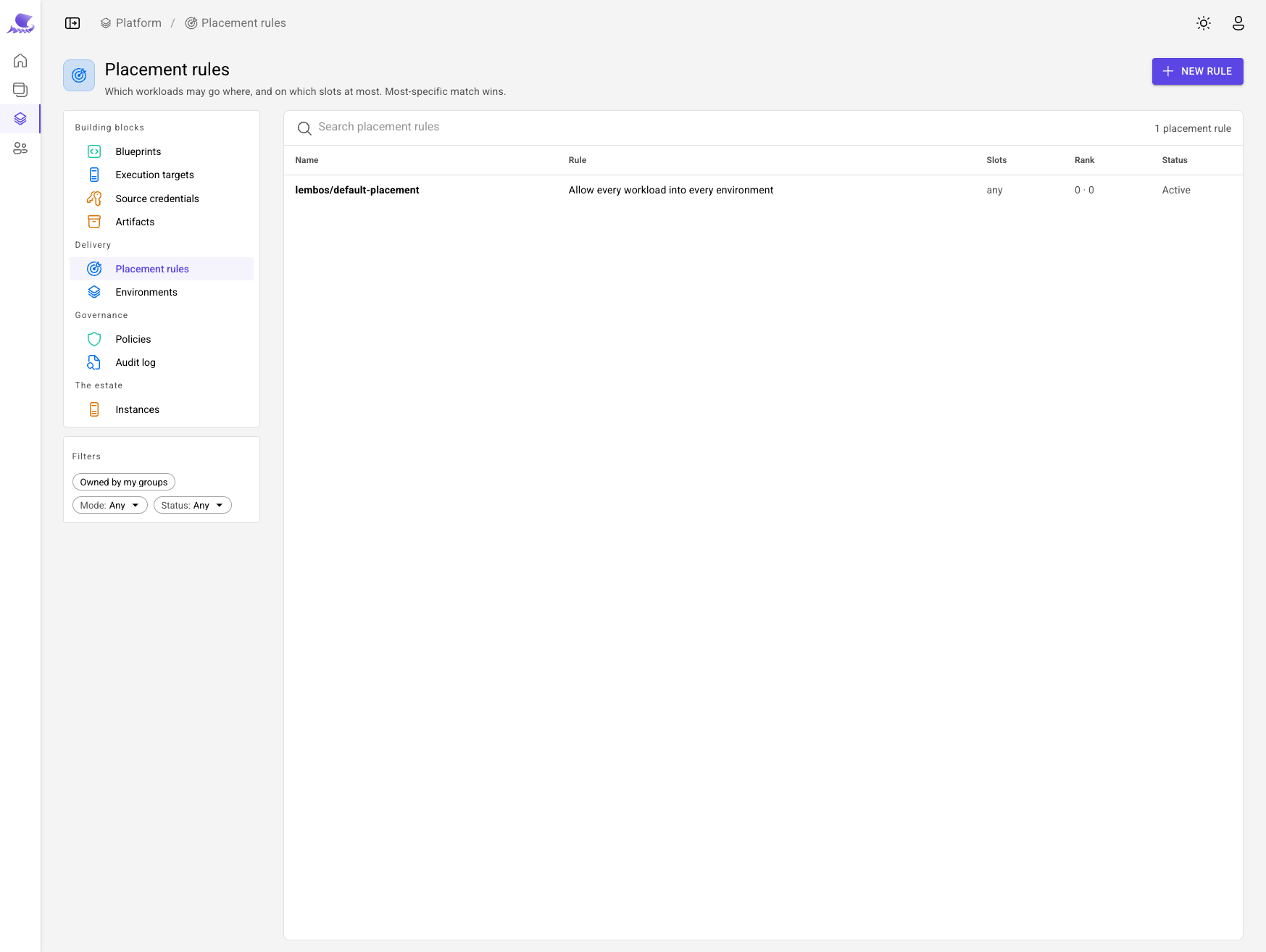
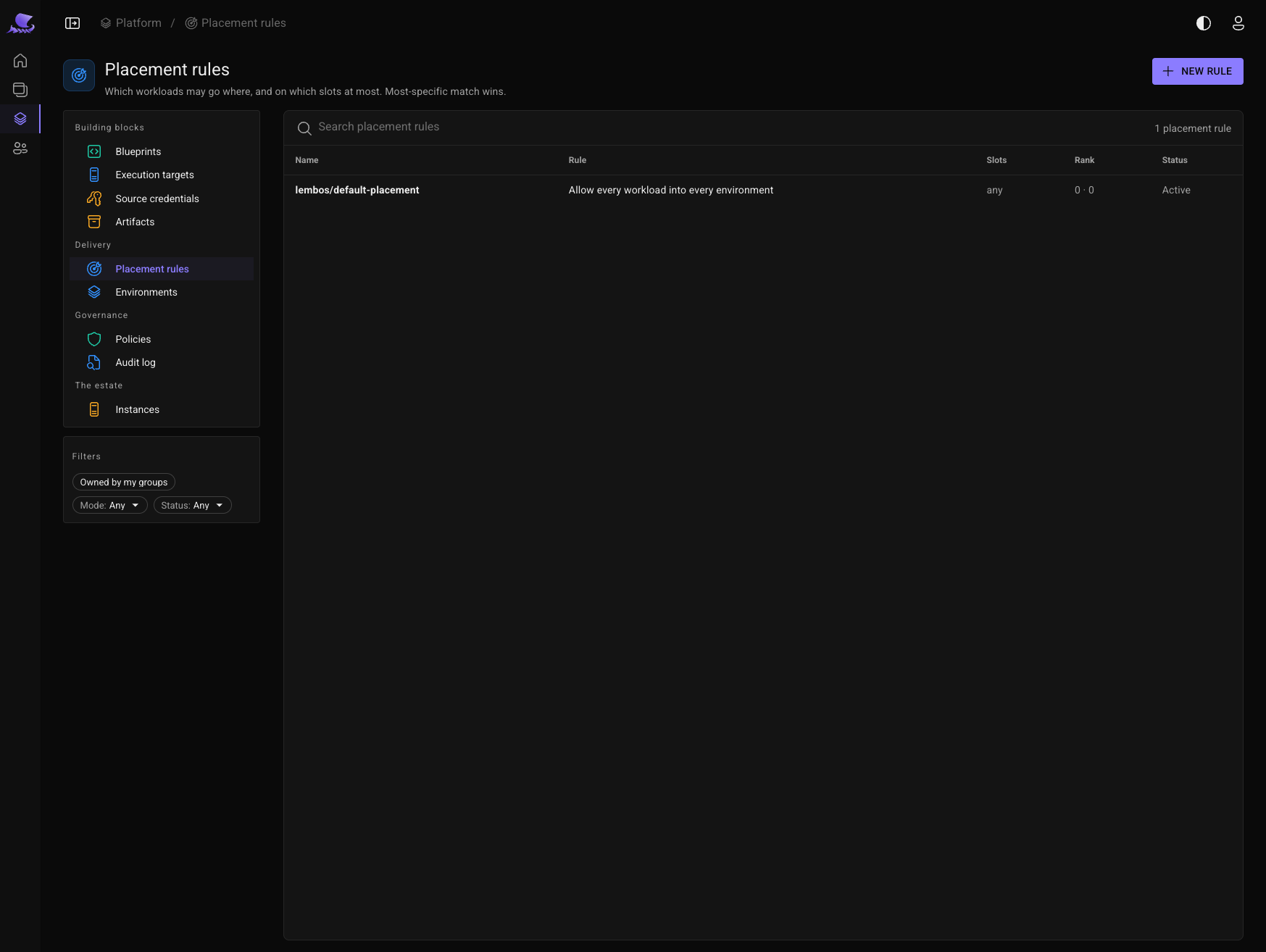
A placement rule says which workloads may go into which environments — and, optionally, into which slots at most. Rules match workloads by business domain, system, owner or blueprint type, and either allow or deny. Deny is what makes "every domain except payments" expressible.
When a component asks to be placed somewhere, Lembos checks it against the rules before anything runs.
Instances
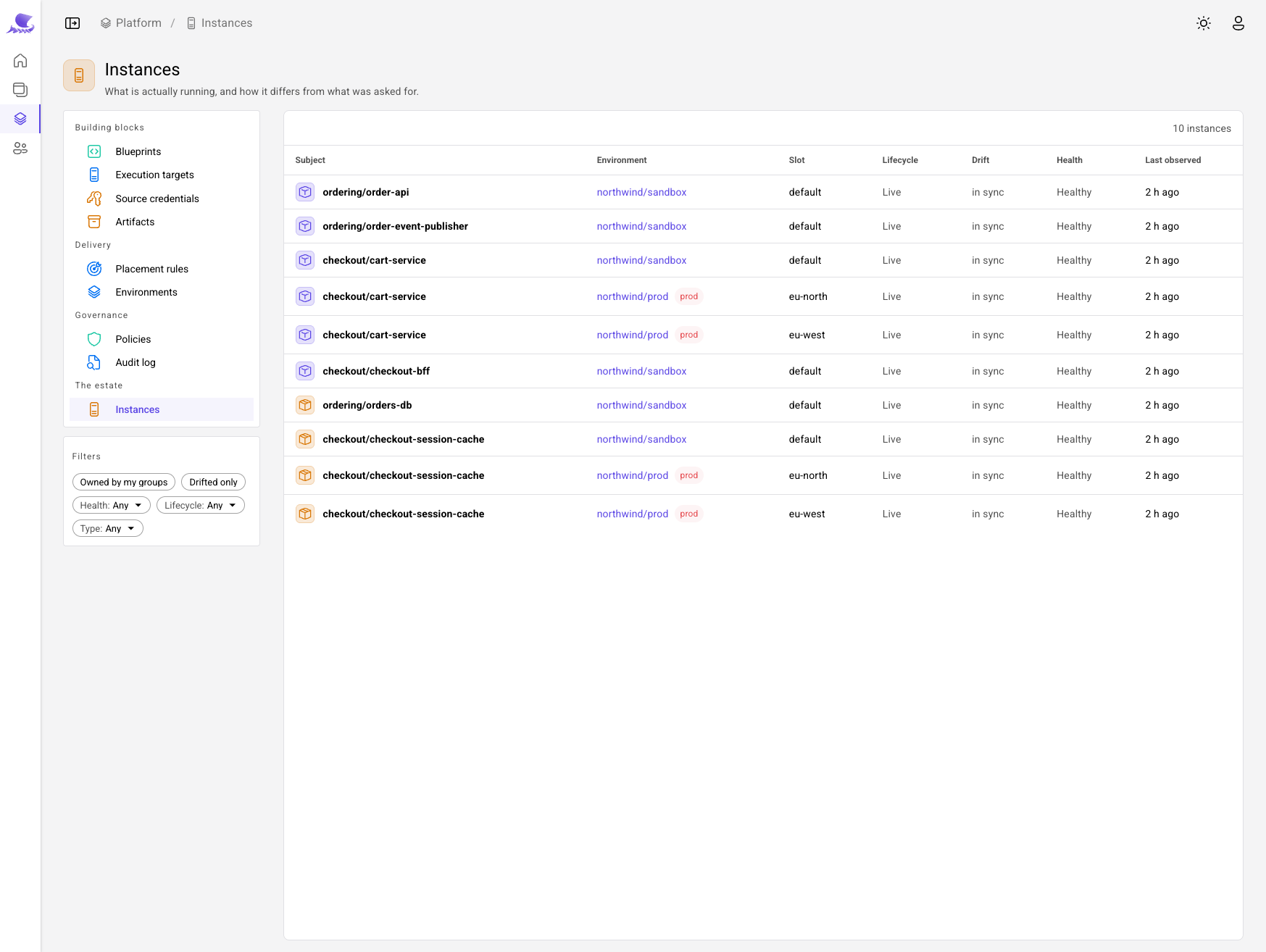
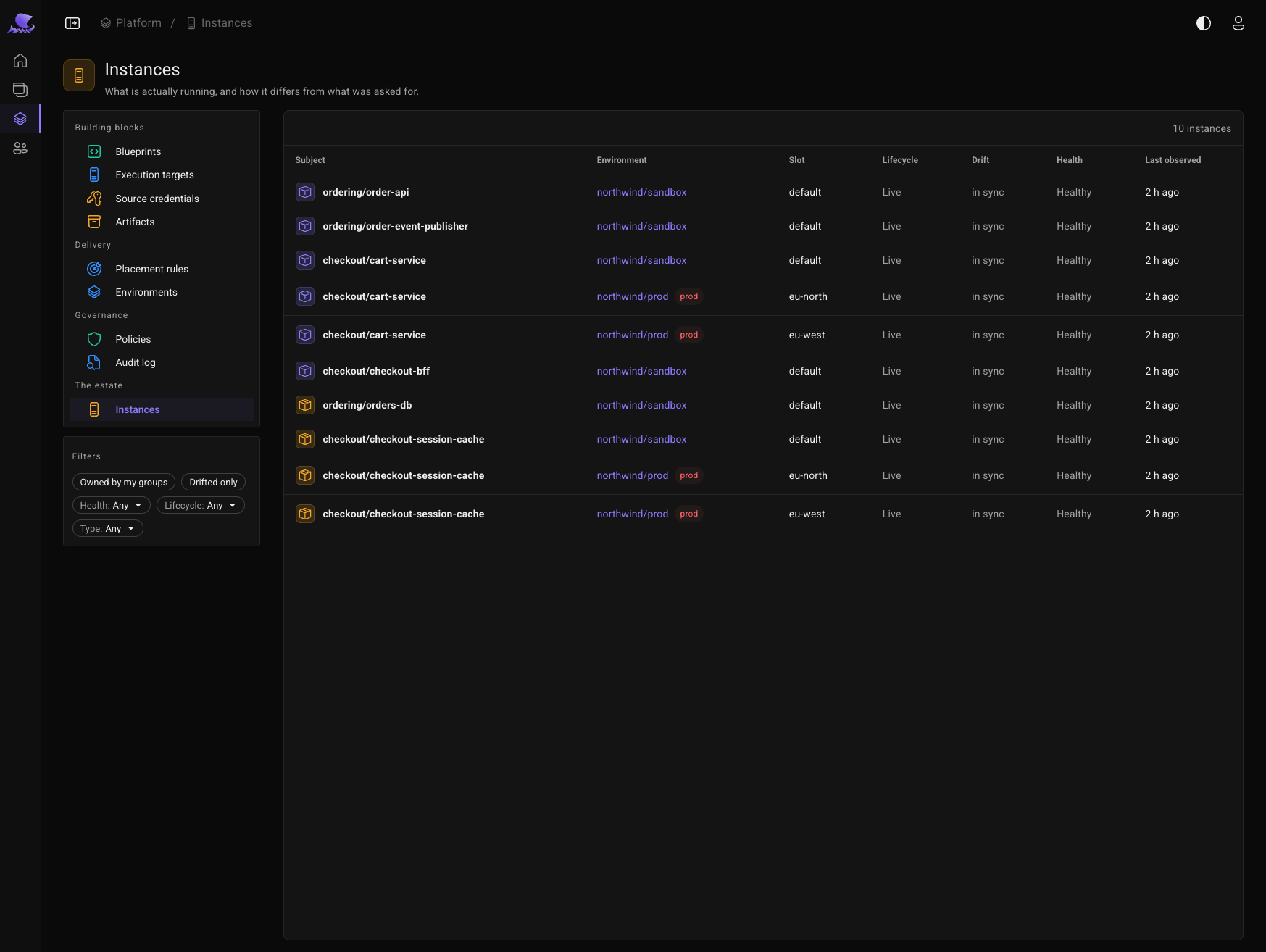
Under Platform → Instances, every building block in every slot of every environment shows what it should be running, what it was last seen running, and whether the two match.