
Configure and ship
Component configuration, releases, promotions, runs and drift.
Configure a component
A component's configuration is its spec: the values for the inputs its blueprint asks for, and where it should be placed. A spec is versioned with everything else, so the release that ships a version also ships its configuration — and a rollback takes the configuration back too.
Values are layered: a common value, overridden per environment, overridden again per slot. A payment provider that differs per country is a slot override — not a fork of the component, and not a copy of the environment.
A value can be:
- written out literally;
- read from somewhere else — another resource's connection string, an environment's output;
- a secret reference — a vault path, a key and an optional version. The secret itself never passes through Lembos; the deployment is handed the reference and mounts it.
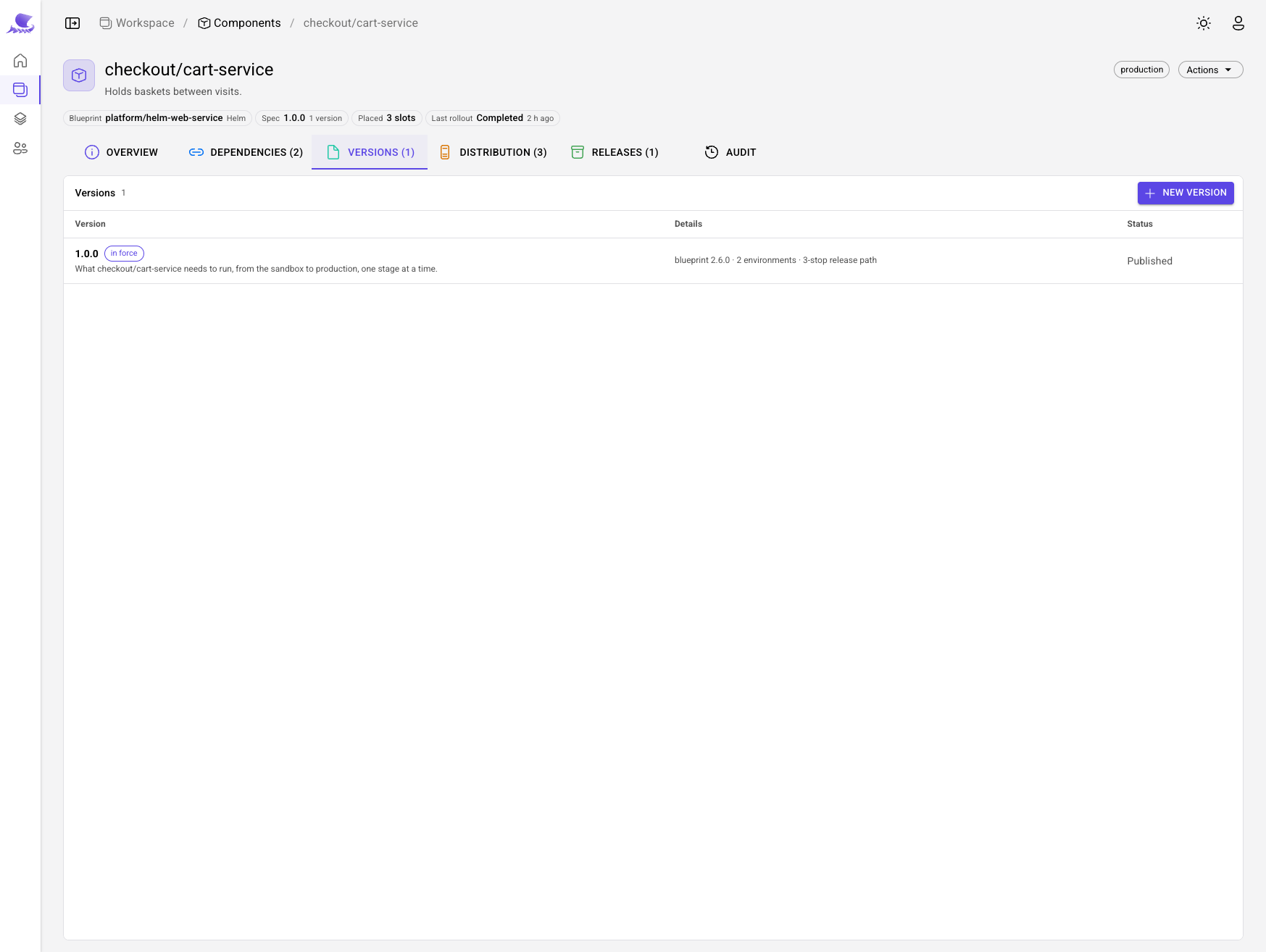
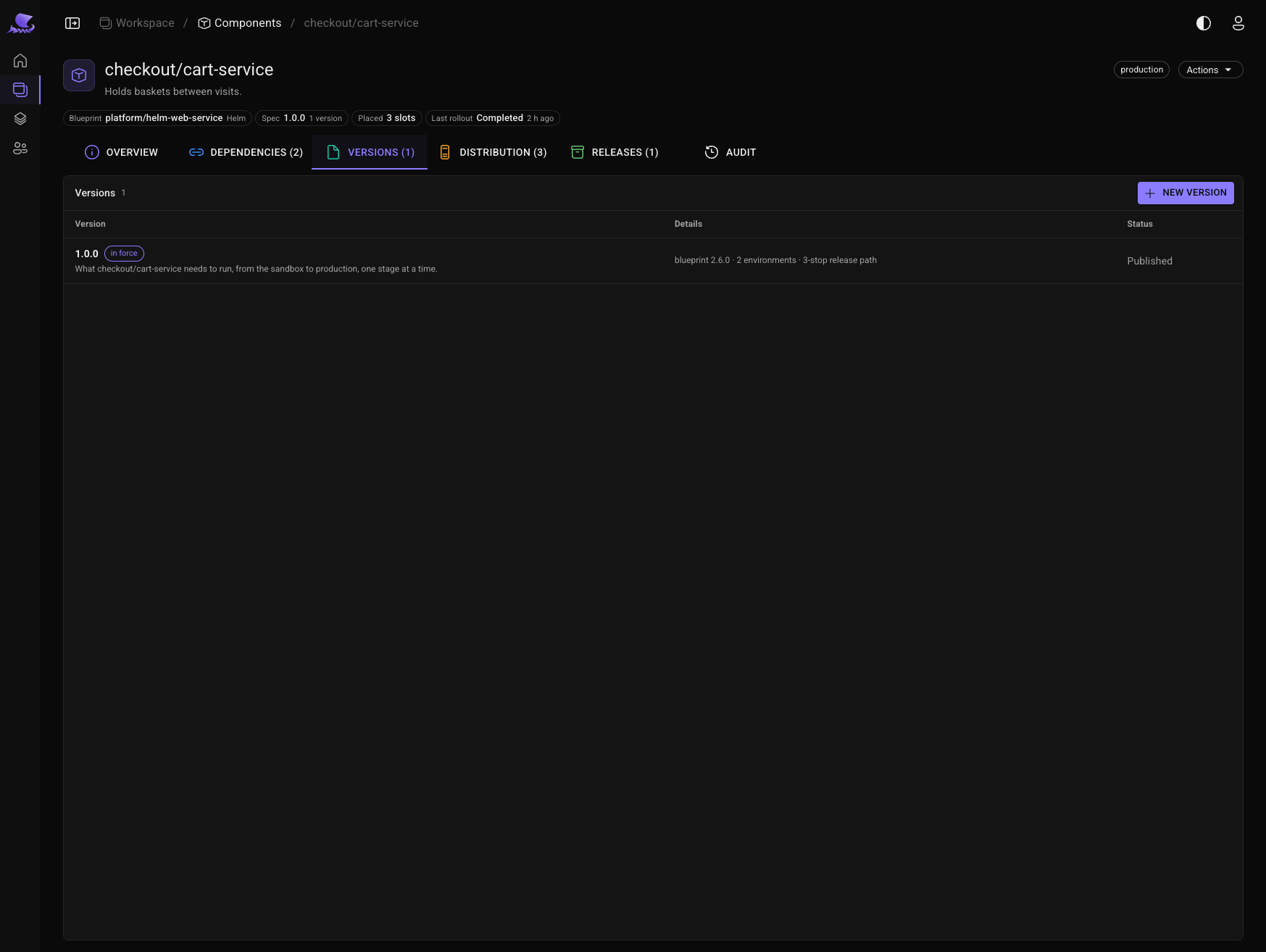
A component's Versions tab lists its spec versions and which one is in force:
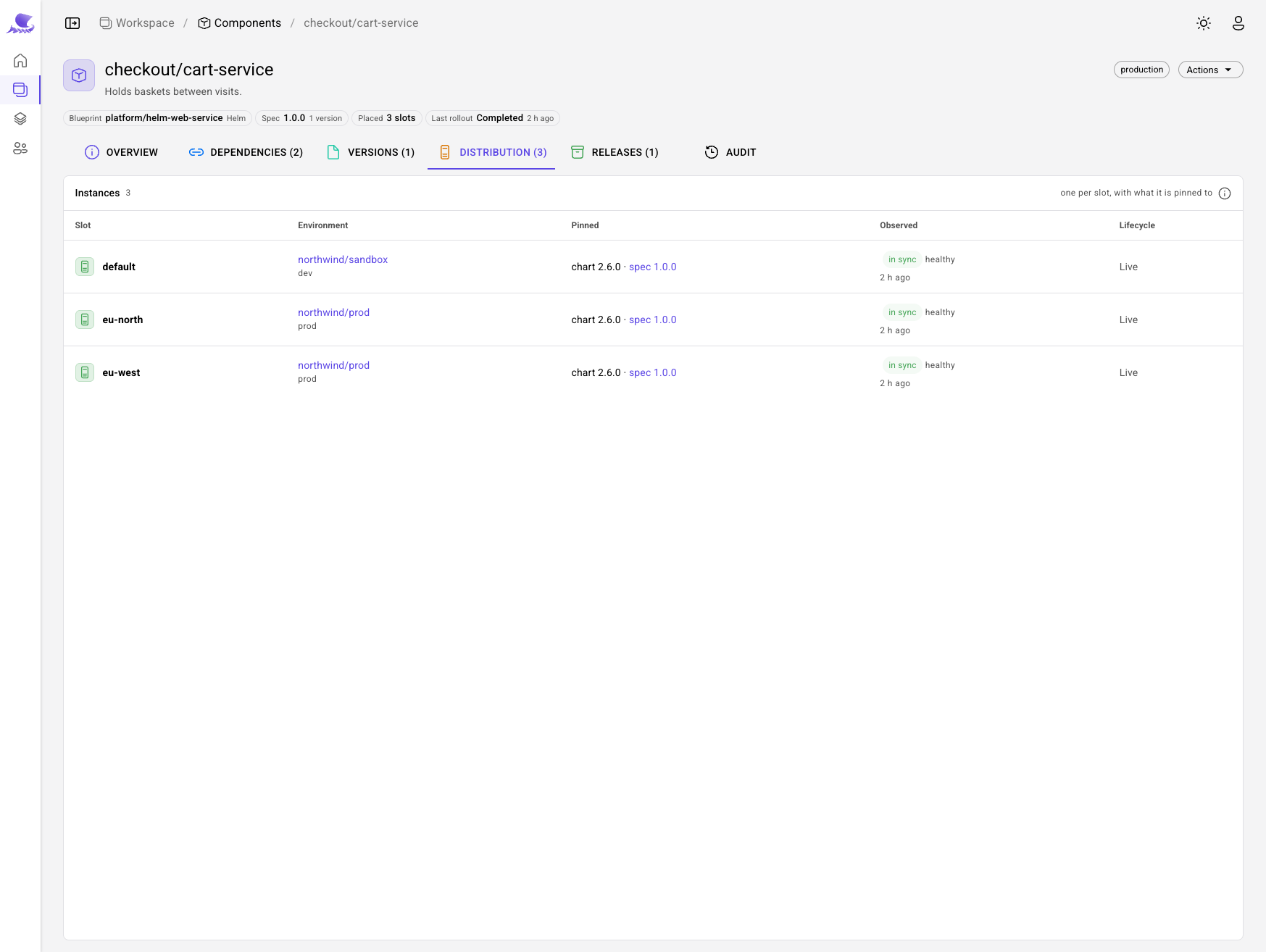
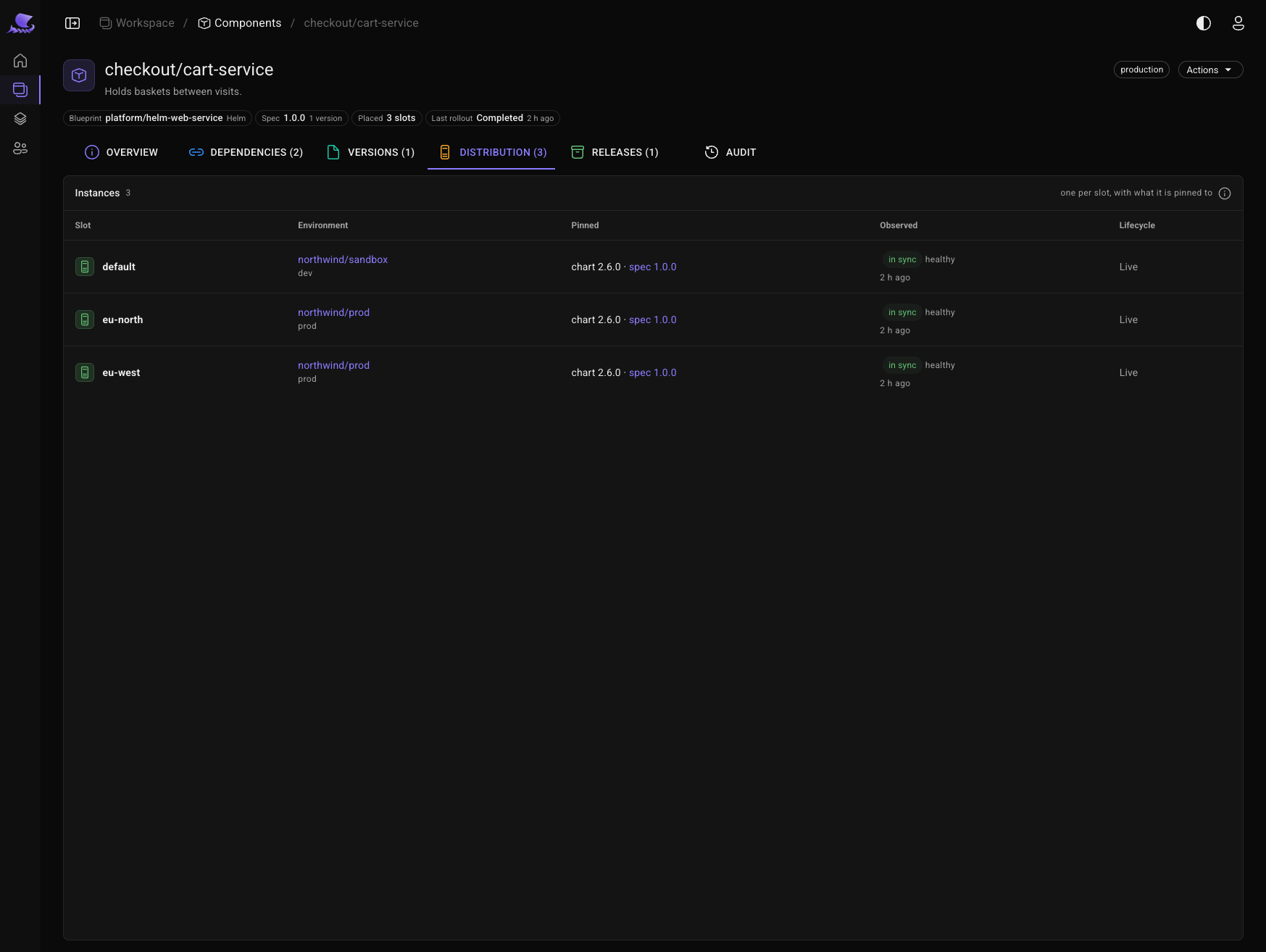
and its Distribution tab shows where it is placed and what each slot is running:
Releases
A release is a set of component artifacts that ship together. While it is being assembled you can change what is in it; once it is ready, its contents freeze.
A release is then promoted into one environment after another. A promotion can name specific slots, so a rollout across regions is an ordered series of promotions — Germany, a look at the dashboards, then France.
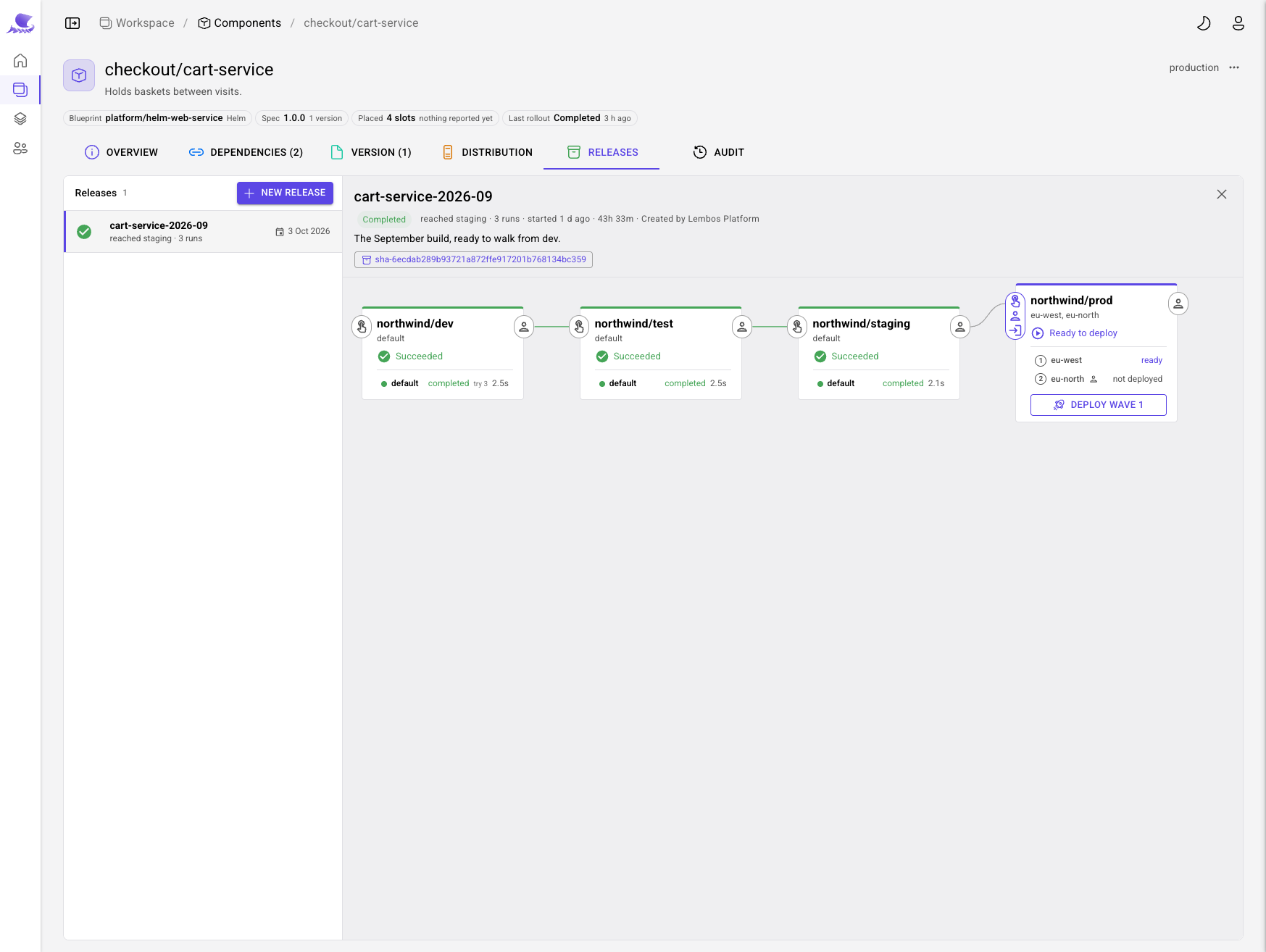
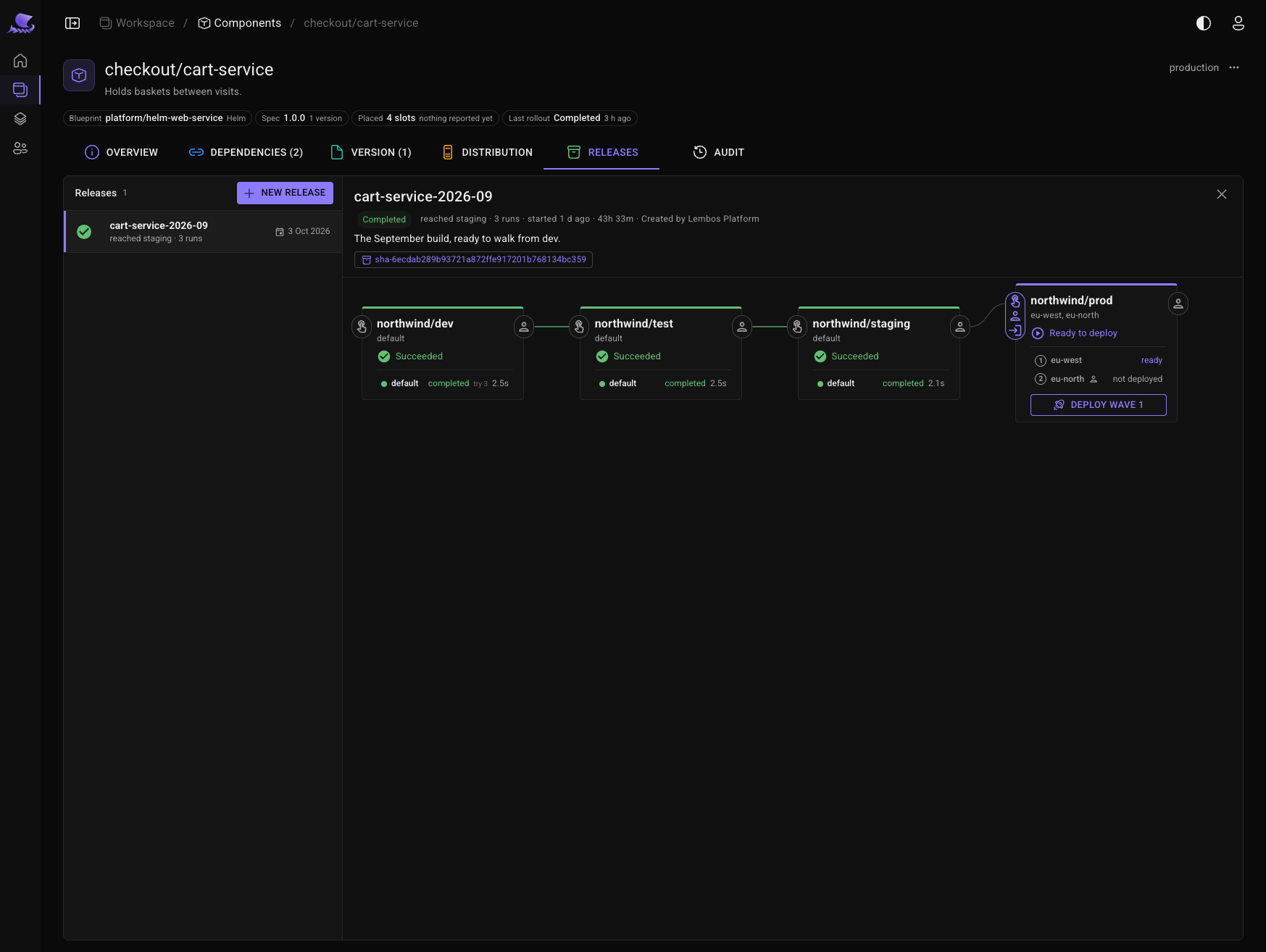
Because every promotion is recorded, "where was this version tested before production?" always has an answer.
Runs
Every attempt to make something match what was declared is a run: one component, resource or environment, in one slot, by one tool. A run records its steps, the exact configuration it was given, and the policy decisions made about it. If a policy asks for approval, the run waits for someone who may approve it — and the person who asked cannot approve their own run.
Runs are durable: a Worker restarting mid-run hands the run to another.
Drift
Lembos keeps what should be running and what is running as separate facts. When they differ — a rollout half-finished, a configuration never deployed, a hand edit to a cluster — the instance shows as drifted, and Lembos works to close the gap.
Rolling back
A rollback is its own kind of event, not just a deployment of an older version. Policies can tell the two apart — a rollback often needs to skip gates a forward deployment must pass.