
Describe your software
Business domains, software systems, components, APIs and resources.
The catalog is where your organisation's software is written down: what exists, who owns it, and how it is connected. Find it under Workspace.
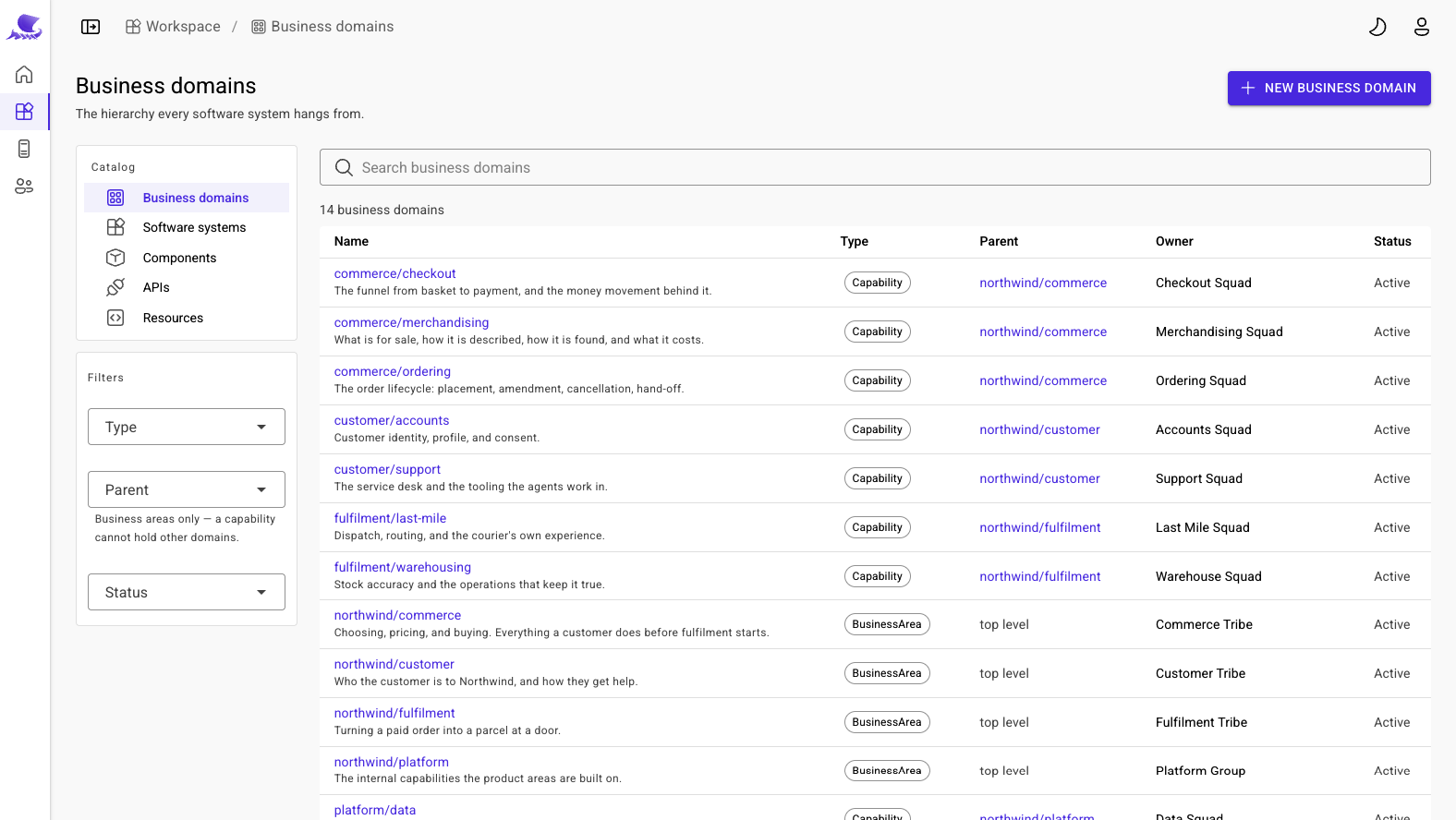
The shape of the catalog
- Business domains are areas of the business. They nest: a business area contains capabilities.
- Software systems group the parts that deliver one capability, and optionally belong to a domain.
- Components are the deployable pieces of a system — a service, a worker, a website.
- Resources are what components depend on and that are provisioned rather than deployed — a database, a cache, a queue.
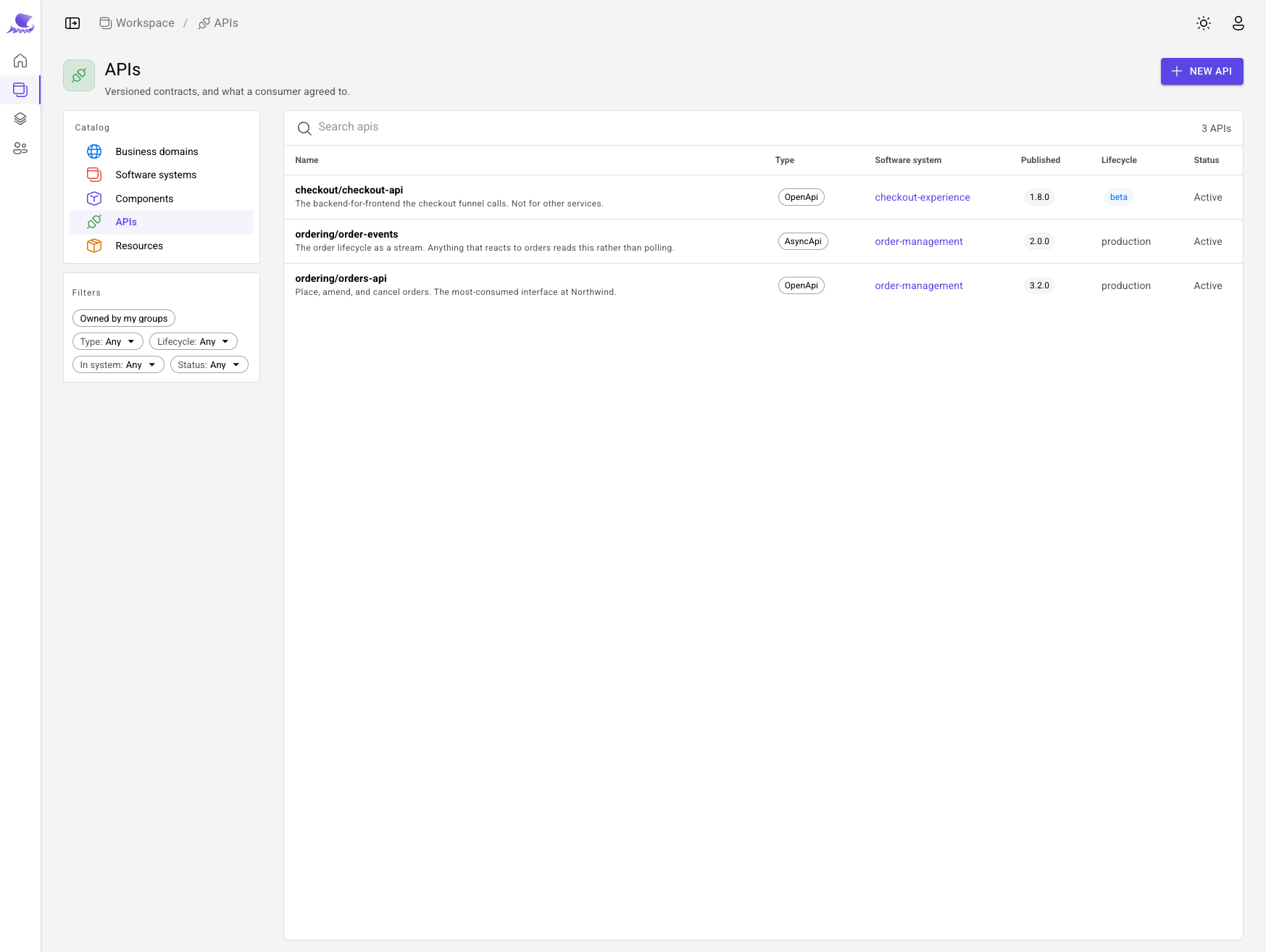
- APIs are the interfaces components provide or consume. An API's specification is versioned, so a consumer can see what it integrated against after the next version lands.
Every entry has a namespace/name that is unique for its type, a description, tags and links — and an
owner, which is always a group.
Components and resources are typed by a blueprint
When you add a component or a resource, you choose the blueprint that defines it. That is what tells Lembos what the thing is and how to build it — "a web service on our standard chart", not a free-text label.
Relations
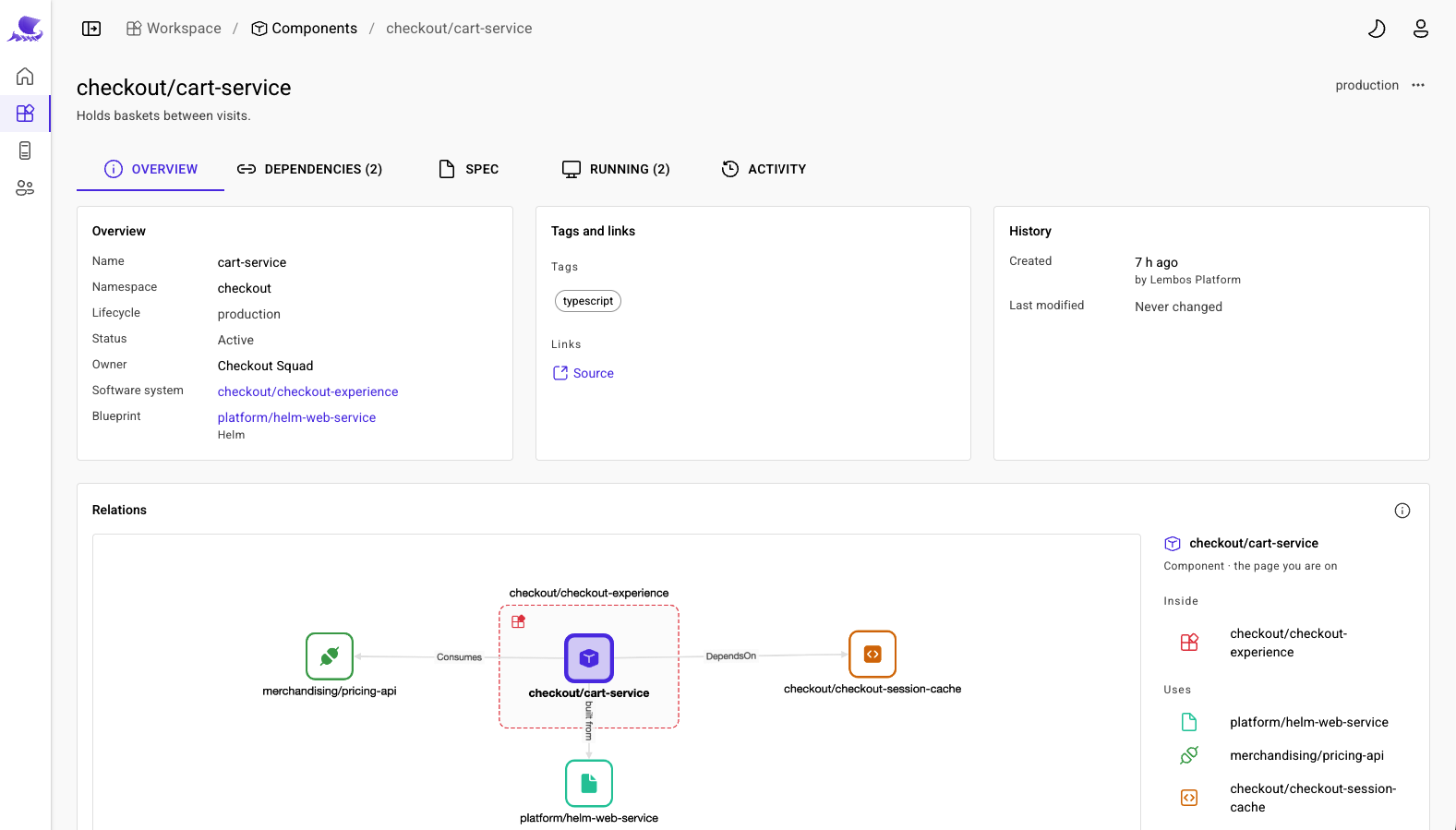
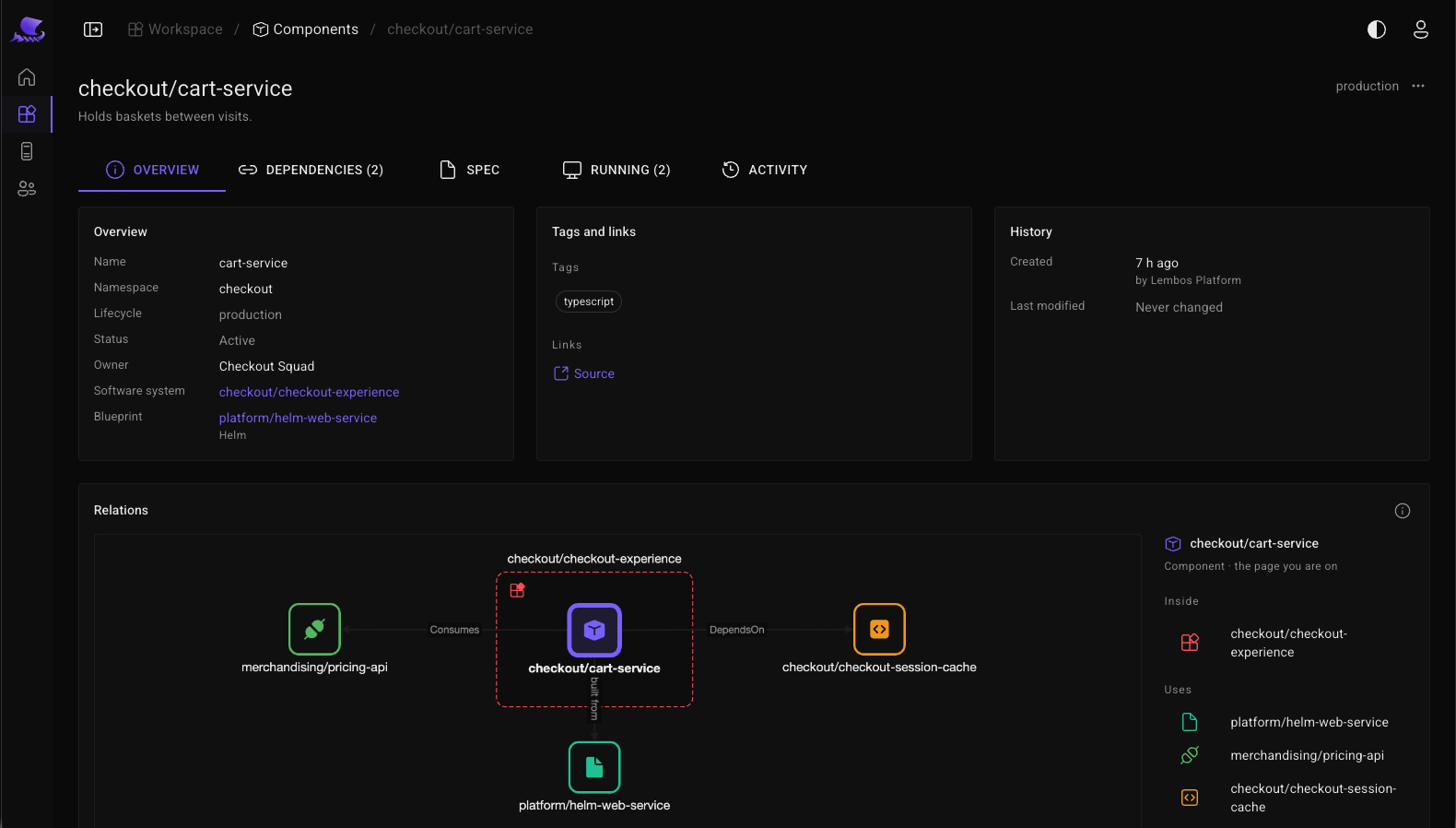
A component records what it provides, what it consumes and what it depends on. The Portal draws these as a graph on the component's page, so you can see what a change might touch.
Lifecycle
Components and APIs carry a lifecycle stage — experimental, beta, production, deprecated, retired — so consumers can see how far to trust them. Anything can be archived when it is no longer needed; its history stays.